 Falmouth MA · ConceptFig. 05 · Product Design · 2023
From Sip to Soil
Falmouth MA · ConceptFig. 05 · Product Design · 2023From Sip to Soil
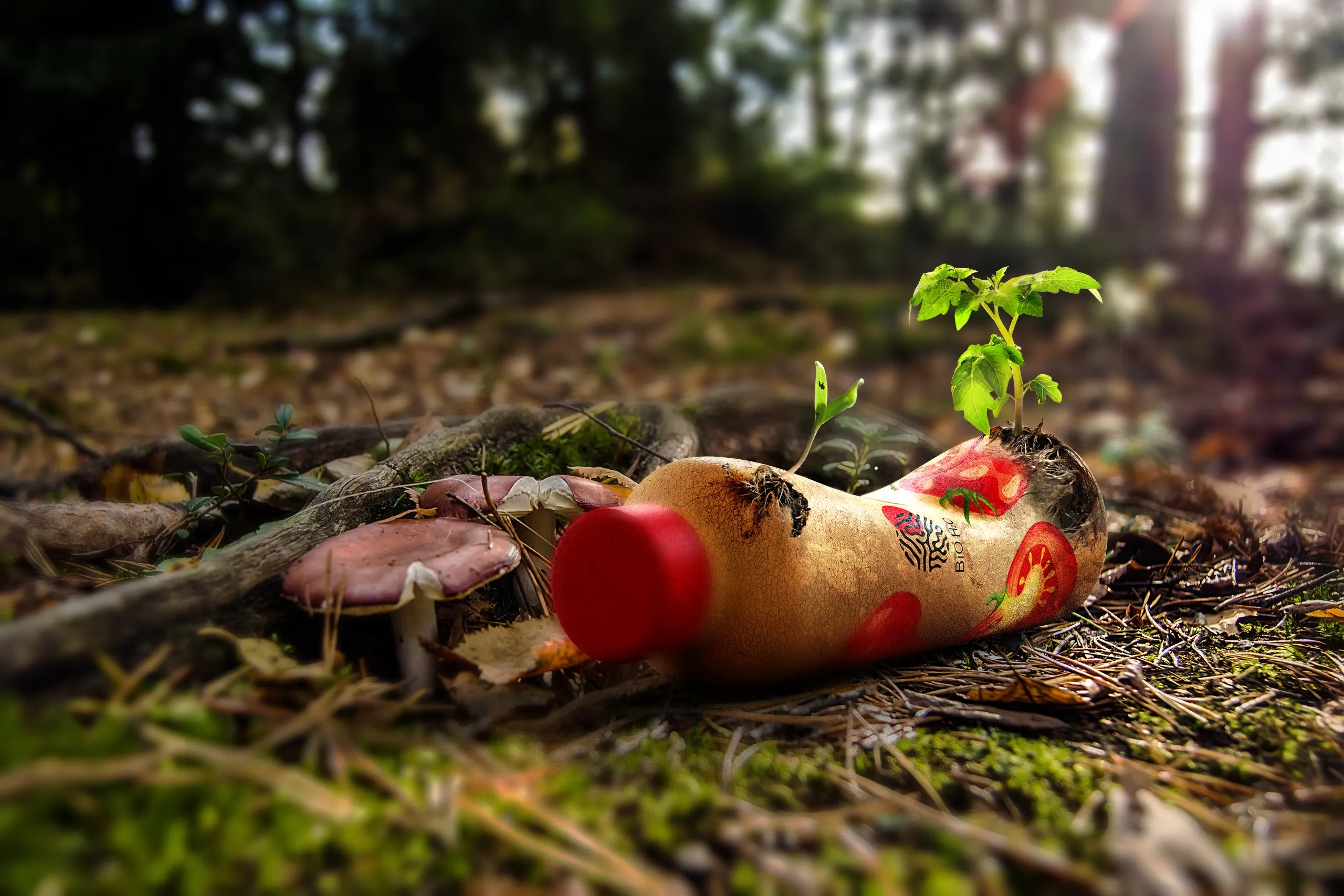
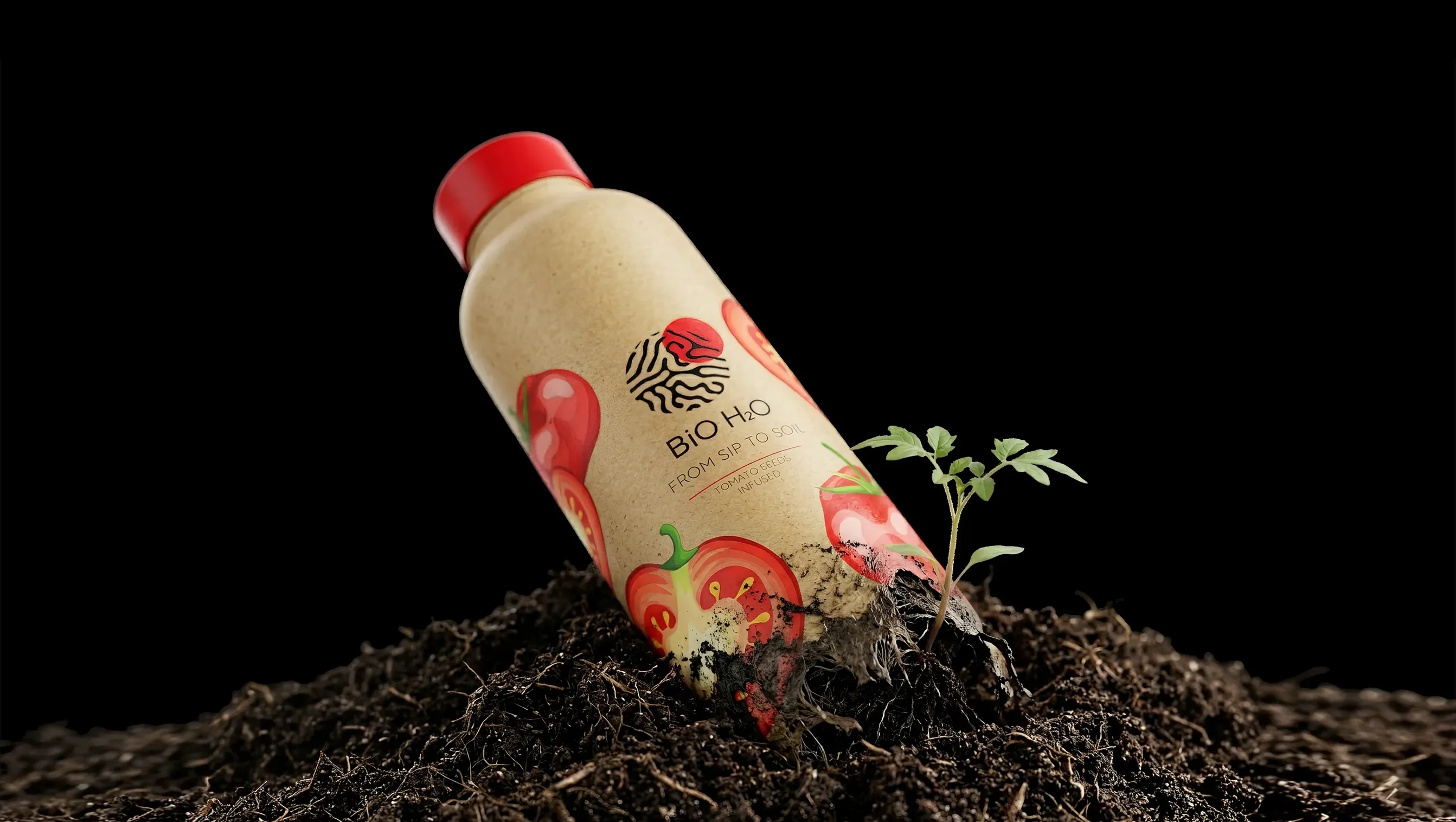
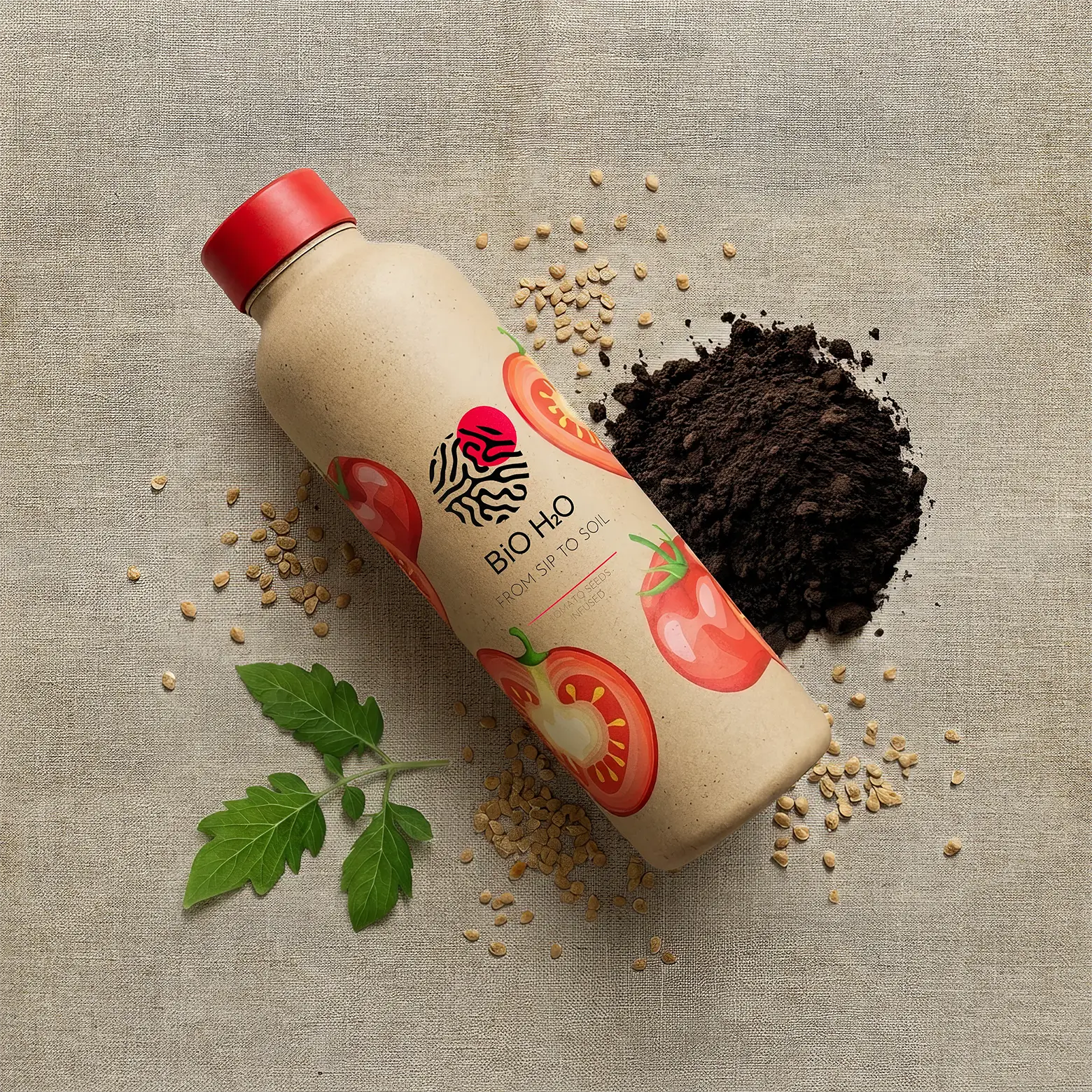
A water bottle that becomes a garden. Bio H₂O is a biodegradable bottle system made from banana fibre waste, infused with viable vegetable seeds. Drink the water, bury the bottle, and within weeks the packaging decomposes — leaving behind a growing plant rather than a piece of ocean plastic.
The project addresses both ends of the plastic crisis: preventing pollution at the source, and transforming the discarded object into environmental regeneration. This is not reduction — it is reversal.
A water bottle that becomes a garden. Bio H₂O is a biodegradable bottle system made from banana fibre waste, infused with viable vegetable seeds. Drink the water, bury the bottle, and within weeks the packaging decomposes — leaving behind a growing plant rather than a piece of ocean plastic.
The project addresses both ends of the plastic crisis: preventing pollution at the source, and transforming the discarded object into environmental regeneration. This is not reduction — it is reversal.
8 million metric tons of plastic enter our oceans every year, yet guilt-based messaging reaches only the already-converted. What if sustainability felt like a reward, not a compromise?
8 million metric tons of plastic enter our oceans every year, yet guilt-based messaging reaches only the already-converted. What if sustainability felt like a reward, not a compromise?
Tonnes of plastic entering the ocean annually. Each bottle takes 450 years to decompose into microplastics that never truly disappear.
Of plastic bottles are never recycled. They degrade into microplastics that enter soil, water, and the food chain permanently.
A bottle that feeds you twice — first as water, then as the vegetable you grow from its remains. Home agriculture from a single discarded object.
Tonnes of plastic entering the ocean annually. Each bottle takes 450 years to decompose into microplastics that never truly disappear.
Of plastic bottles are never recycled. They degrade into microplastics that enter soil, water, and the food chain permanently.
A bottle that feeds you twice — first as water, then as the vegetable you grow from its remains. Home agriculture from a single discarded object.
The market has tried guilt-based sustainability messaging for two decades. It reaches the already-converted and alienates everyone else. Biodegradable alternatives exist — but most fail because they ask consumers to sacrifice convenience for conscience. Bio H₂O reframes the problem entirely: what if the bottle's end-of-life was its most valuable moment?
Design a water bottle whose disposal is its most valuable moment. The bottle must complete a full cycle: hydrate the human, feed the soil, grow the harvest. Not reduction — reversal.
The market has tried guilt-based sustainability messaging for two decades. It reaches the already-converted and alienates everyone else. Biodegradable alternatives exist — but most fail because they ask consumers to sacrifice convenience for conscience. Bio H₂O reframes the problem entirely: what if the bottle's end-of-life was its most valuable moment?
Design a water bottle whose disposal is its most valuable moment. The bottle must complete a full cycle: hydrate the human, feed the soil, grow the harvest. Not reduction — reversal.
The research mapped the full lifecycle of a plastic bottle — from petroleum extraction to ocean floor — and identified the disposal moment as the critical design opportunity. Existing biodegradable bottles decompose into nothing. Bio H₂O decomposes into something.
PHA (polyhydroxyalkanoate) biopolymer emerged as the strongest candidate: it’s food-safe, marine-degradable, and can be moulded to encapsulate seeds within the bottle wall. When the bottle decomposes, the seeds are released into the soil.
The research mapped the full lifecycle of a plastic bottle — from petroleum extraction to ocean floor — and identified the disposal moment as the critical design opportunity. Existing biodegradable bottles decompose into nothing. Bio H₂O decomposes into something.
PHA (polyhydroxyalkanoate) biopolymer emerged as the strongest candidate: it’s food-safe, marine-degradable, and can be moulded to encapsulate seeds within the bottle wall. When the bottle decomposes, the seeds are released into the soil.
People enjoy trying new things. All you have to do is make them want it.
Guilt-based sustainability is exhausted. Consumers are saturated with environmental obligation. The design opportunity is desire — create something beautiful, novel, and viscerally satisfying to use. The seed-infused bottle is not a sacrifice. It is a gift you give to the soil. That is an entirely different emotional register, and one that does not require the consumer to already care about the environment to participate.
The bottle doesn’t ask you to recycle. It asks you to plant.
People enjoy trying new things. All you have to do is make them want it.
Guilt-based sustainability is exhausted. Consumers are saturated with environmental obligation. The design opportunity is desire — create something beautiful, novel, and viscerally satisfying to use. The seed-infused bottle is not a sacrifice. It is a gift you give to the soil. That is an entirely different emotional register, and one that does not require the consumer to already care about the environment to participate.
The bottle doesn’t ask you to recycle. It asks you to plant.
One bottle. Full cycle.
Drink. Drop. Grow.
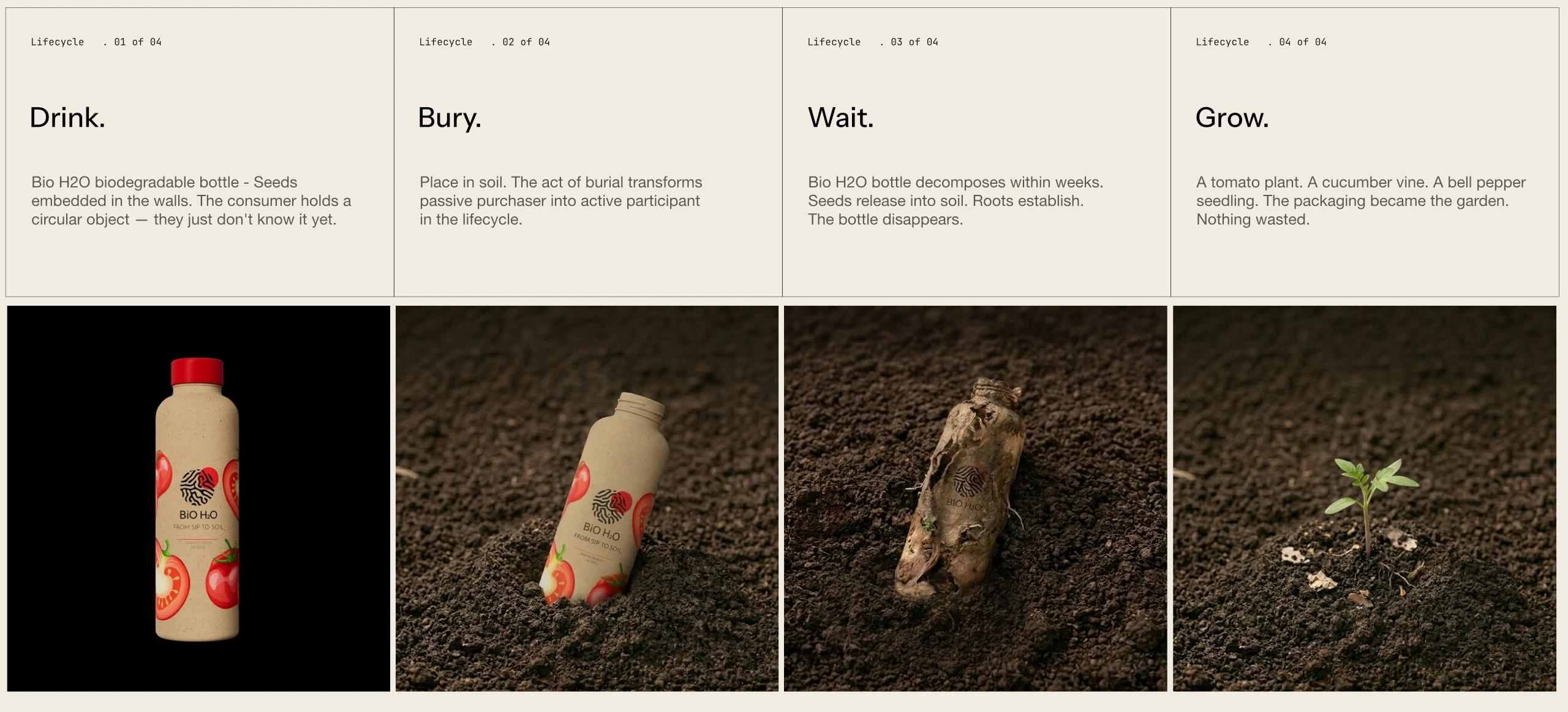
A biodegradable water bottle with vegetable seeds embedded in its walls. Drink the water, bury the bottle, grow your own food. The object completes a full cycle: it hydrates you, then decomposes into the soil, then produces a crop you can harvest at home.

One bottle. Full cycle.
Drink. Drop. Grow.
A biodegradable water bottle with vegetable seeds embedded in its walls. Drink the water, bury the bottle, grow your own food. The object completes a full cycle: it hydrates you, then decomposes into the soil, then produces a crop you can harvest at home.
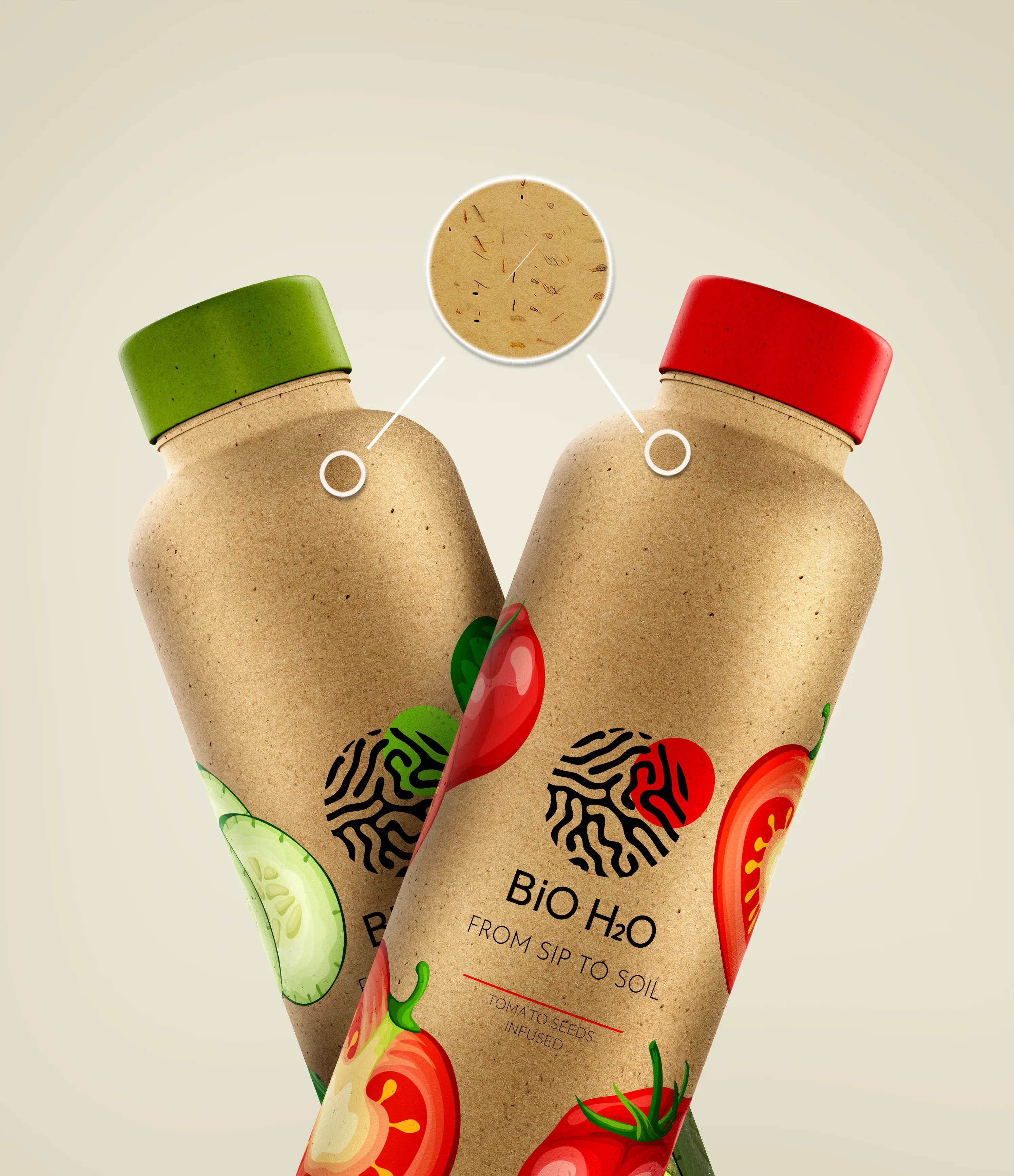
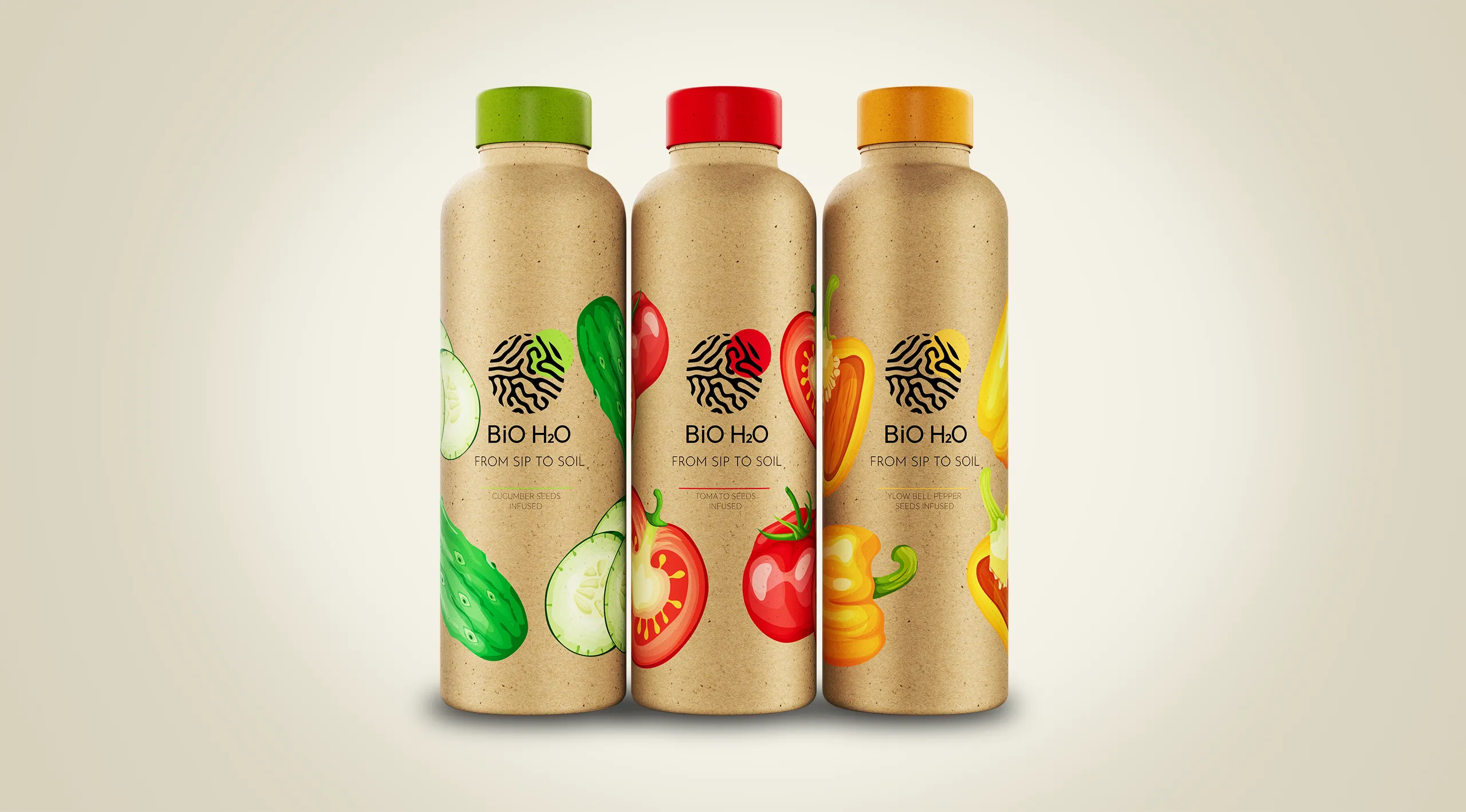
The Bio H₂O mark is drawn from banana leaf fibre structure — a fingerprint that symbolises both the organic origin of the material and the idea that this product leaves no harmful trace. Every element of the identity reinforces the lifecycle narrative: kraft-textured surfaces communicate biodegradable before a single word is read.
The Bio H₂O mark is drawn from banana leaf fibre structure — a fingerprint that symbolises both the organic origin of the material and the idea that this product leaves no harmful trace. Every element of the identity reinforces the lifecycle narrative: kraft-textured surfaces communicate biodegradable before a single word is read.
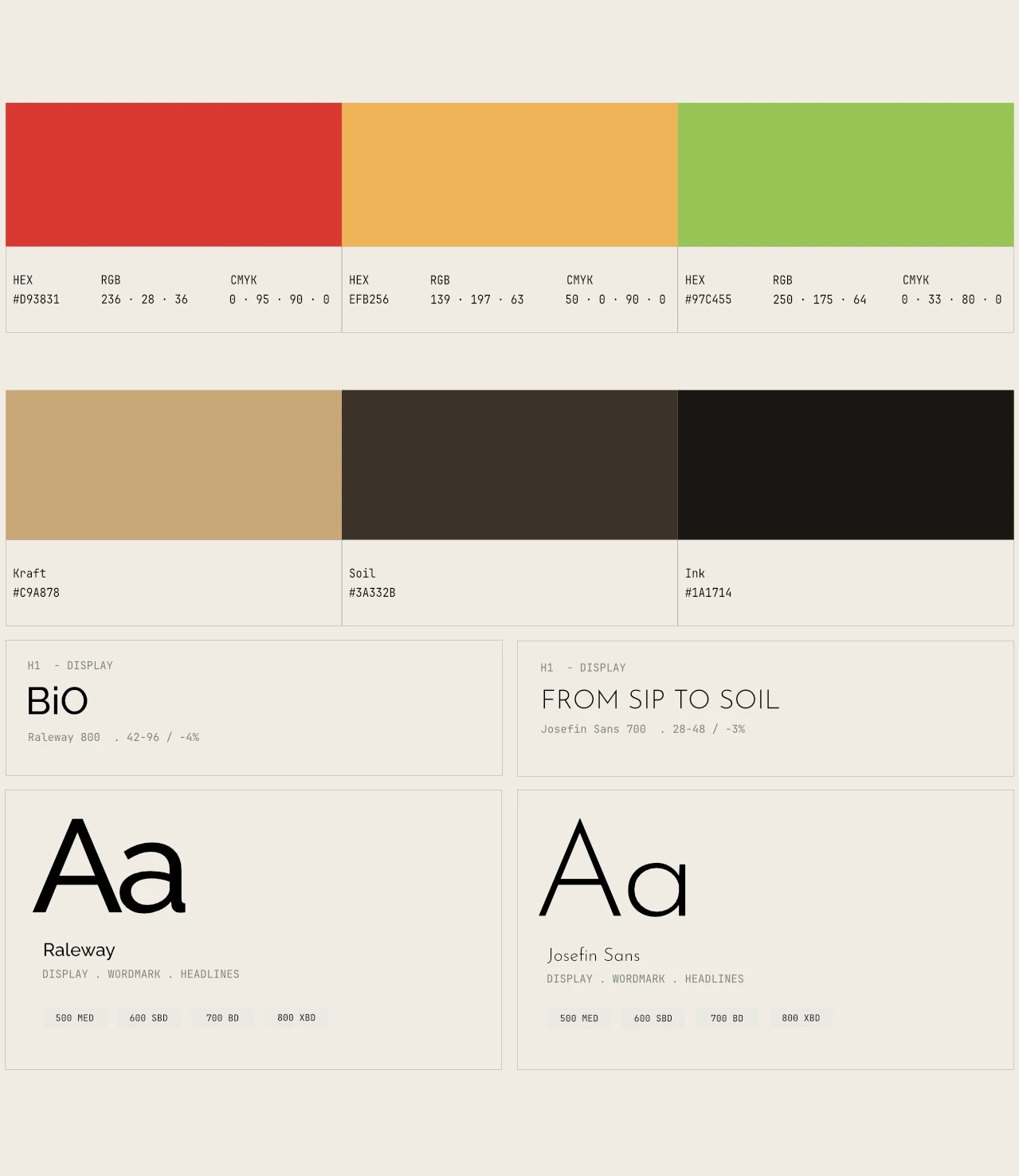
The colour-coded cap system provides instant variant identification without fragmenting the brand. Each vegetable variant uses a single accent colour across cap, illustration, and label — green for cucumber, red for tomato, yellow for bell pepper. The bold illustrations against the natural kraft texture create contrast that reads as desirable rather than dutiful.
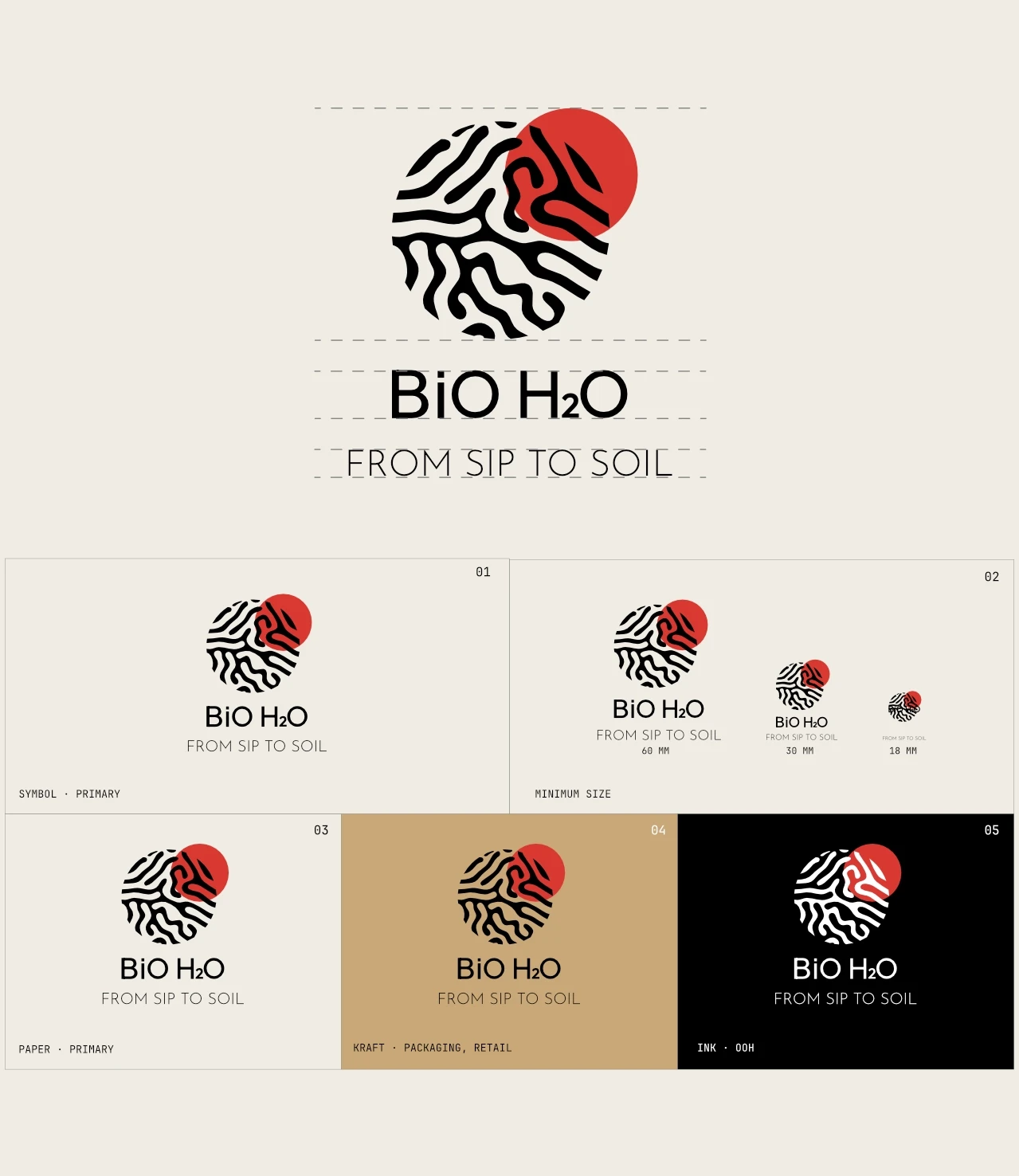
The colour-coded cap system provides instant variant identification without fragmenting the brand. Each vegetable variant uses a single accent colour across cap, illustration, and label — green for cucumber, red for tomato, yellow for bell pepper. The bold illustrations against the natural kraft texture create contrast that reads as desirable rather than dutiful.
The concept is airtight. People asked where to buy it.
The concept is airtight. People asked where to buy it.
The research held up. The material science, the behavioural insight, the full-cycle narrative — every layer reinforced the next. The concept is tight enough that people asked where to buy it. That response tells you the design is doing its job: it made sustainability feel like something you want, not something you should do.
Take it off the page. Build it.
Build a working prototype. Test the PHA seed-encapsulation process, prove the germination rates, and take the concept to someone willing to make it real — a materials startup, a sustainable packaging investor, or a brand looking for a product that means something beyond the label.
The concept is airtight. People asked where to buy it.
The concept is airtight. People asked where to buy it.
The research held up. The material science, the behavioural insight, the full-cycle narrative — every layer reinforced the next. The concept is tight enough that people asked where to buy it. That response tells you the design is doing its job: it made sustainability feel like something you want, not something you should do.
Take it off the page. Build it.
Build a working prototype. Test the PHA seed-encapsulation process, prove the germination rates, and take the concept to someone willing to make it real — a materials startup, a sustainable packaging investor, or a brand looking for a product that means something beyond the label.