 Falmouth MA · Degree ShowFig. 01 · Installation · 2025
Weight of AI
Falmouth MA · Degree ShowFig. 01 · Installation · 2025Weight of AI
Weight of AI is an interactive installation that places AI's environmental cost in the visitor's hands — literally. The work began as a data investigation into water footprint. Moving through consumption datasets, the research landed somewhere unexpected: AI infrastructure is a water story nobody is telling. While billions of people carry water by hand every day, data centres cooling the servers behind every query consume vast quantities of the same resource. The installation makes that invisible exchange physical and immediate.
The project started with water. AI arrived inside the data — and the real investigation began. This is the second answer to the question Hidden Thirst asked first. Where that vessel makes the cost permanent and exact — 500 ml, fixed in bronze — this installation makes it durational and physical: not a number held once, but a weight carried for as long as you can stand it.
Weight of AI is an interactive installation that places AI's environmental cost in the visitor's hands — literally. The work began as a data investigation into water footprint. Moving through consumption datasets, the research landed somewhere unexpected: AI infrastructure is a water story nobody is telling. While billions of people carry water by hand every day, data centres cooling the servers behind every query consume vast quantities of the same resource. The installation makes that invisible exchange physical and immediate.
The project started with water. AI arrived inside the data — and the real investigation began. This is the second answer to the question Hidden Thirst asked first. Where that vessel makes the cost permanent and exact — 500 ml, fixed in bronze — this installation makes it durational and physical: not a number held once, but a weight carried for as long as you can stand it.
While billions lack access to clean water, data centers driven by AI demand consume vast amounts of it for cooling.
While billions lack access to clean water, data centers driven by AI demand consume vast amounts of it for cooling.
People without access to safely managed drinking water — a quarter of the species.
People who spend thirty minutes or more, every day, walking to collect twenty litres by hand.
Share of global water collection performed by women and girls. The cost of scarcity is gendered before it is anything else.
People without access to safely managed drinking water — a quarter of the species.
People who spend thirty minutes or more, every day, walking to collect twenty litres by hand.
Share of global water collection performed by women and girls. The cost of scarcity is gendered before it is anything else.
AI infrastructure consumes vast quantities of freshwater to cool its data centres — yet this cost is completely invisible to the people using it. Meanwhile, 292 million people spend over 30 minutes every day collecting water by hand.
Existing awareness about this gap was nearly zero. The design challenge: make invisible infrastructure felt rather than simply known.
AI infrastructure consumes vast quantities of freshwater to cool its data centres — yet this cost is completely invisible to the people using it. Meanwhile, 292 million people spend over 30 minutes every day collecting water by hand.
Existing awareness about this gap was nearly zero. The design challenge: make invisible infrastructure felt rather than simply known.
The research moved across two axes — the rising environmental footprint of AI on one side, and the still-unresolved scale of water poverty on the other.
The jerry can emerged from this reading as the only object that holds both meanings at once: it is the literal vessel of water labour in the Global South, and a globally legible symbol of scarcity.
The research moved across two axes — the rising environmental footprint of AI on one side, and the still-unresolved scale of water poverty on the other.
The jerry can emerged from this reading as the only object that holds both meanings at once: it is the literal vessel of water labour in the Global South, and a globally legible symbol of scarcity.
We hear the story. We see the story. We never feel it.
People have carried water for survival every day for generations. We know this. But knowing is not feeling. The gap between the two is where the work lives.
The installation doesn’t explain the crisis. It makes you live a fraction of it.
We hear the story. We see the story. We never feel it.
People have carried water for survival every day for generations. We know this. But knowing is not feeling. The gap between the two is where the work lives.
The installation doesn’t explain the crisis. It makes you live a fraction of it.
One visitor. One can. Three minutes.
Held, not watched.
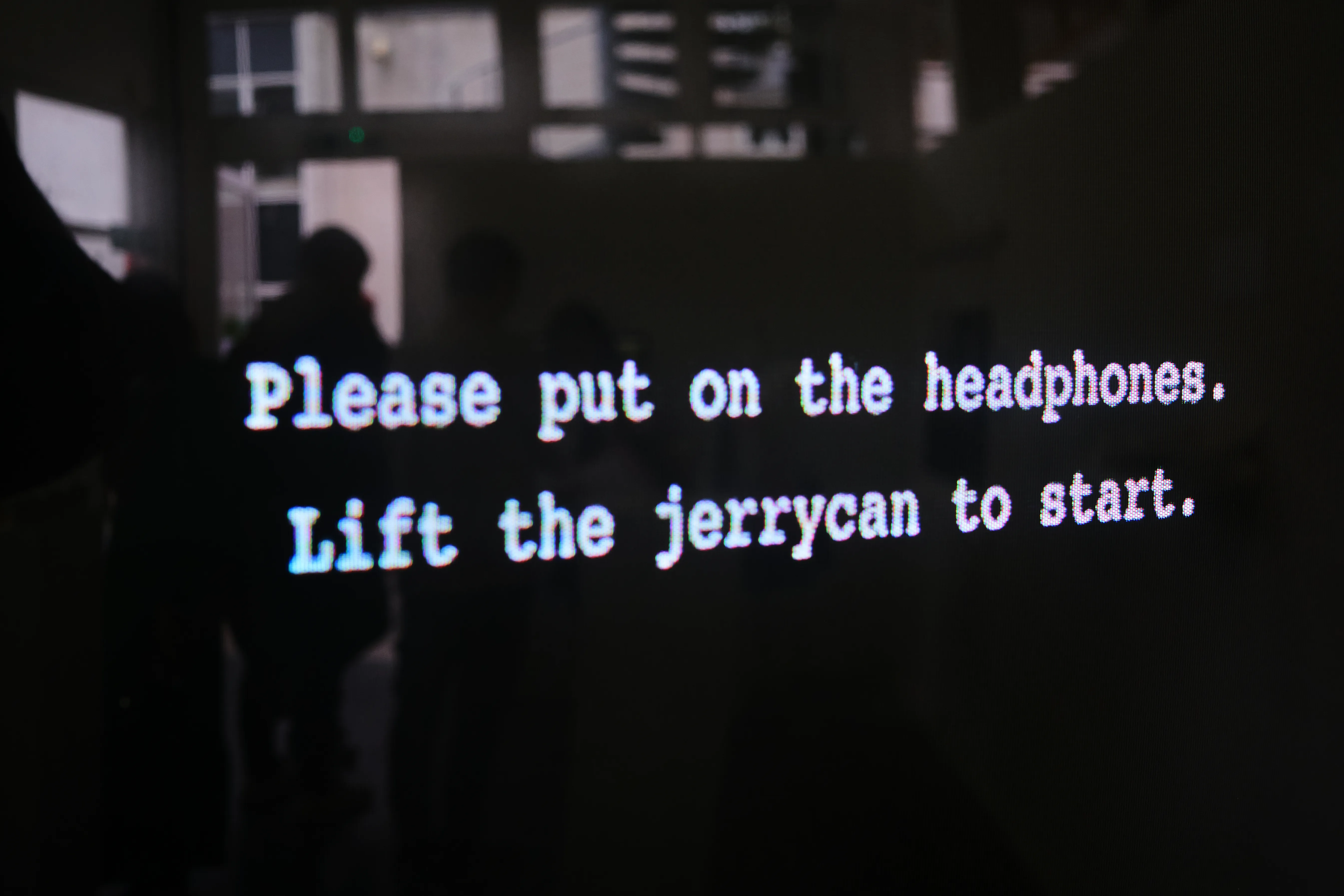
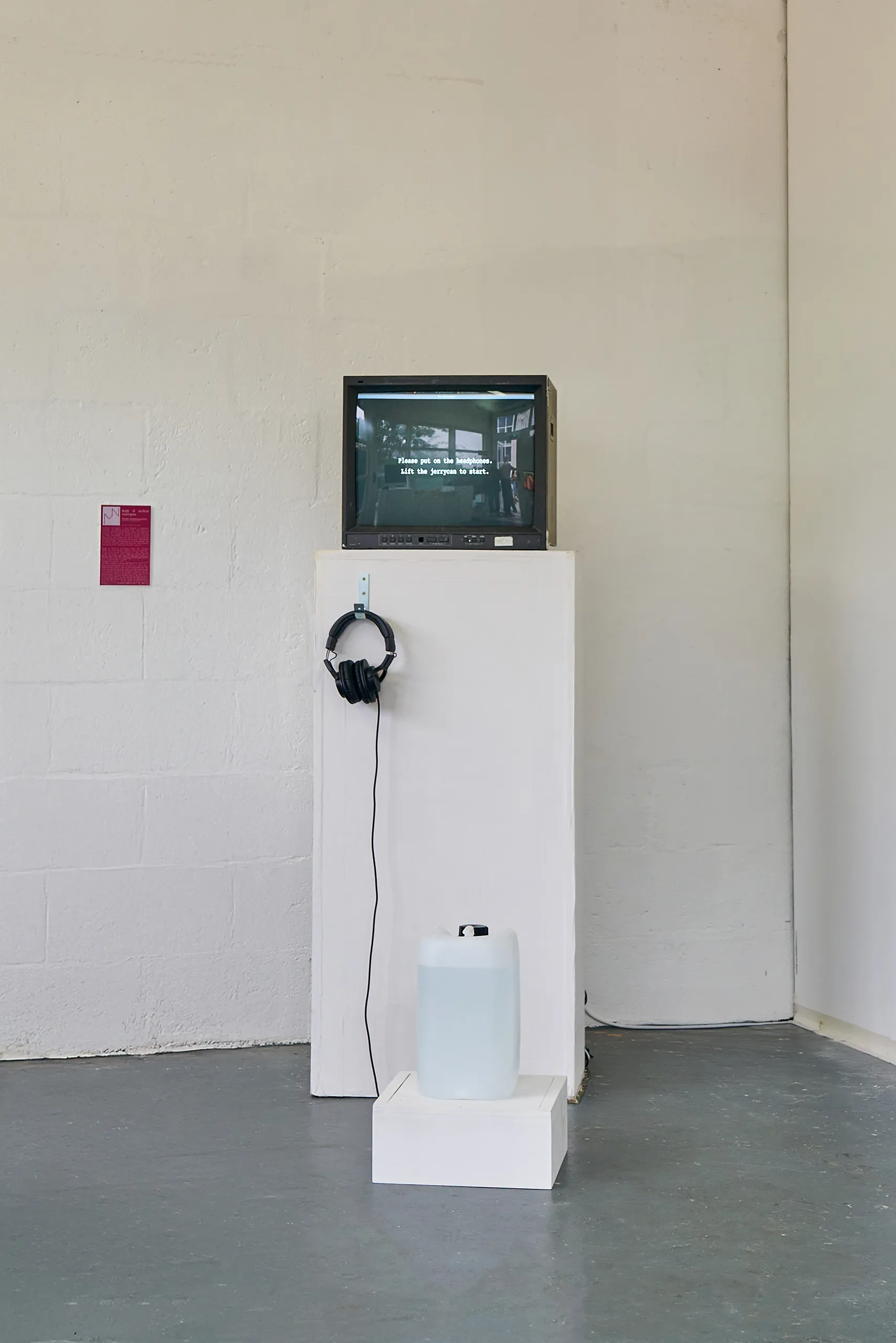
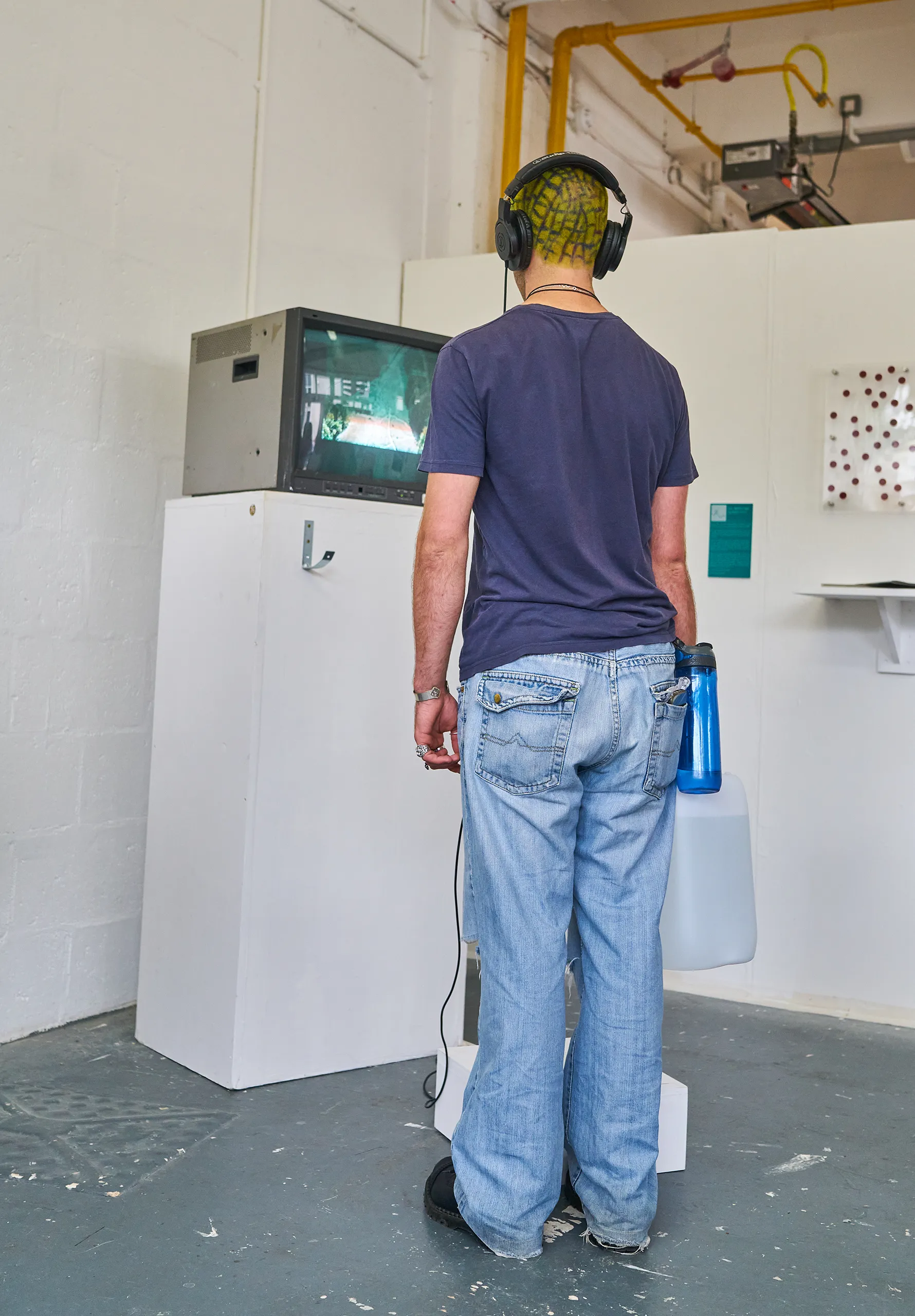
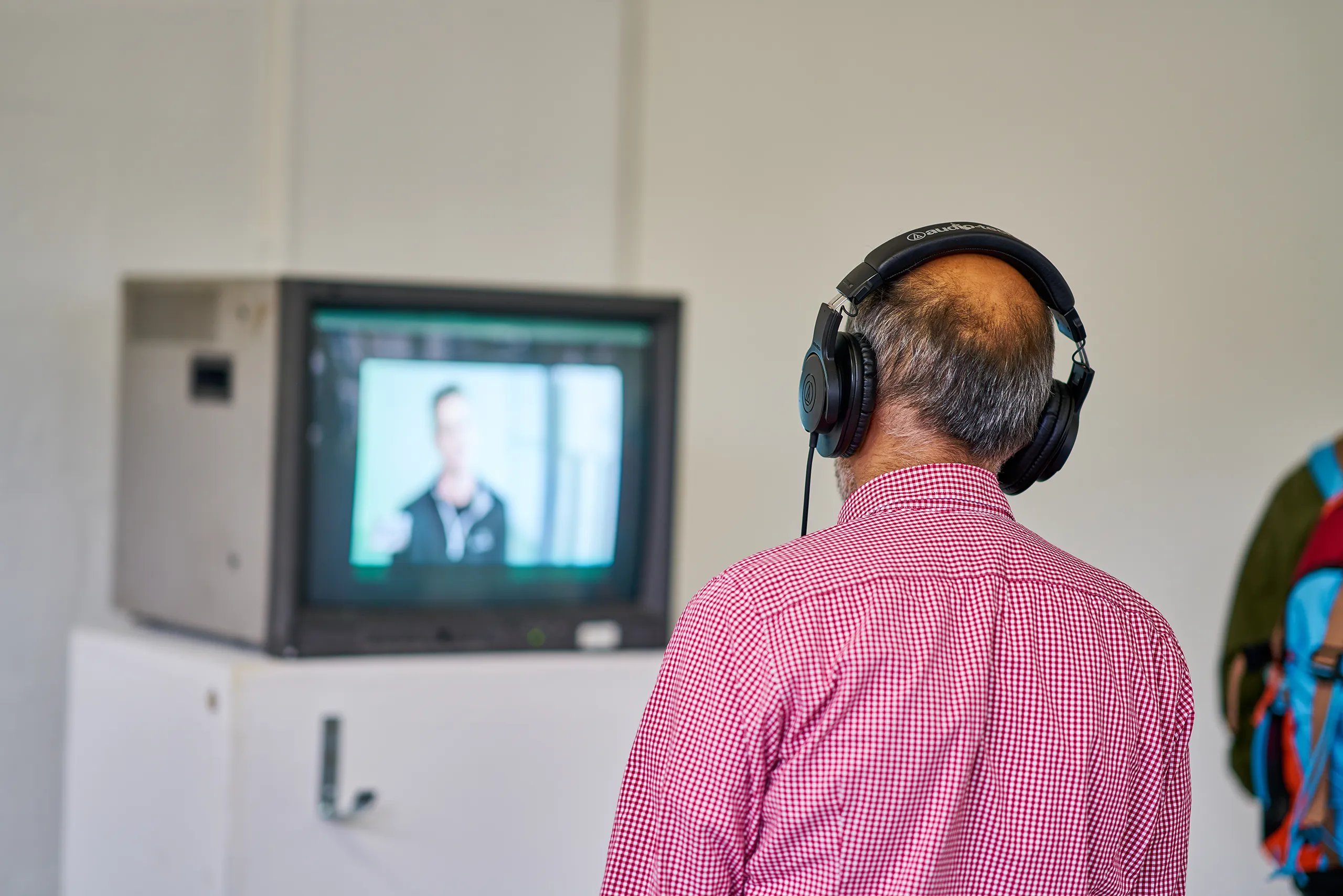
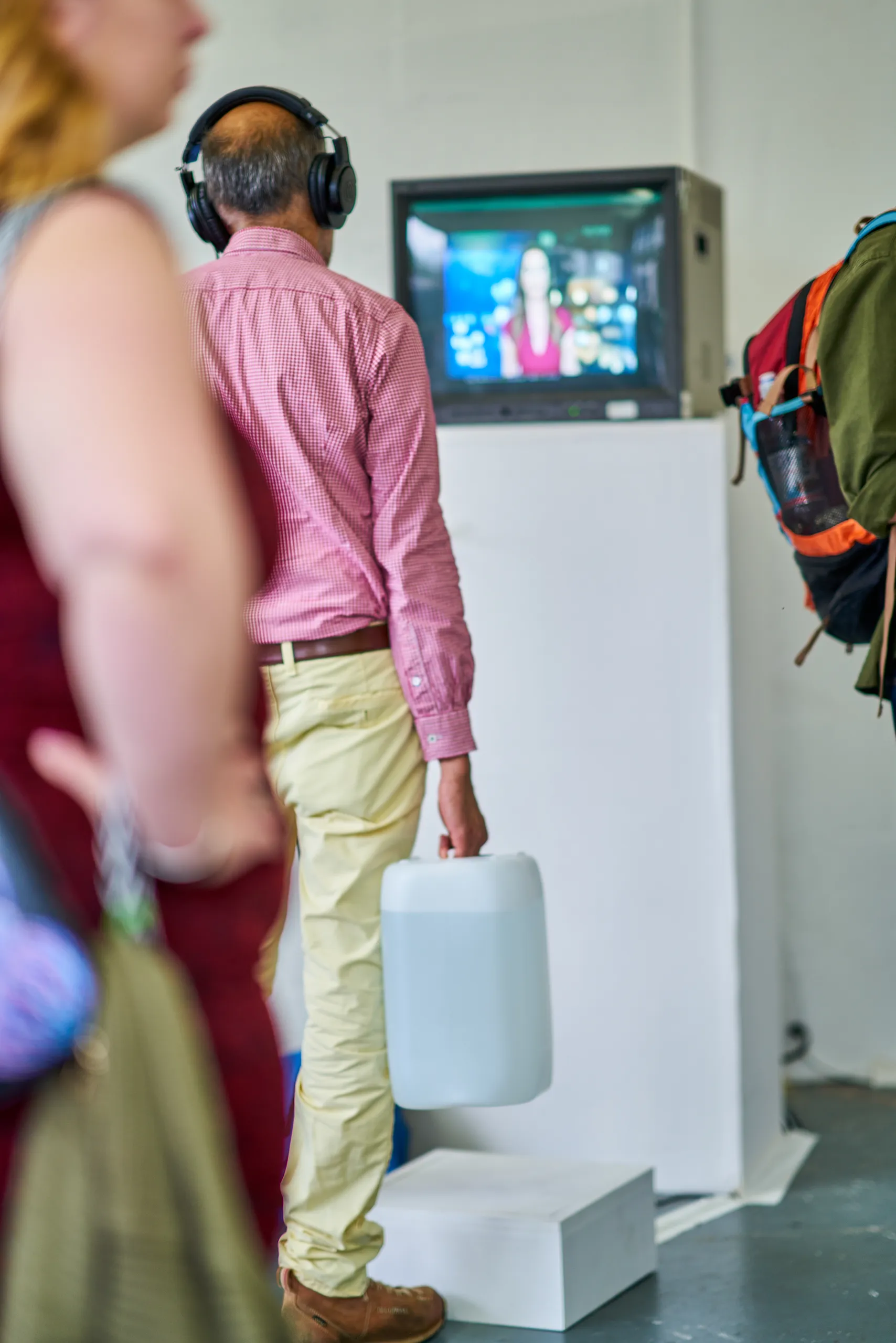
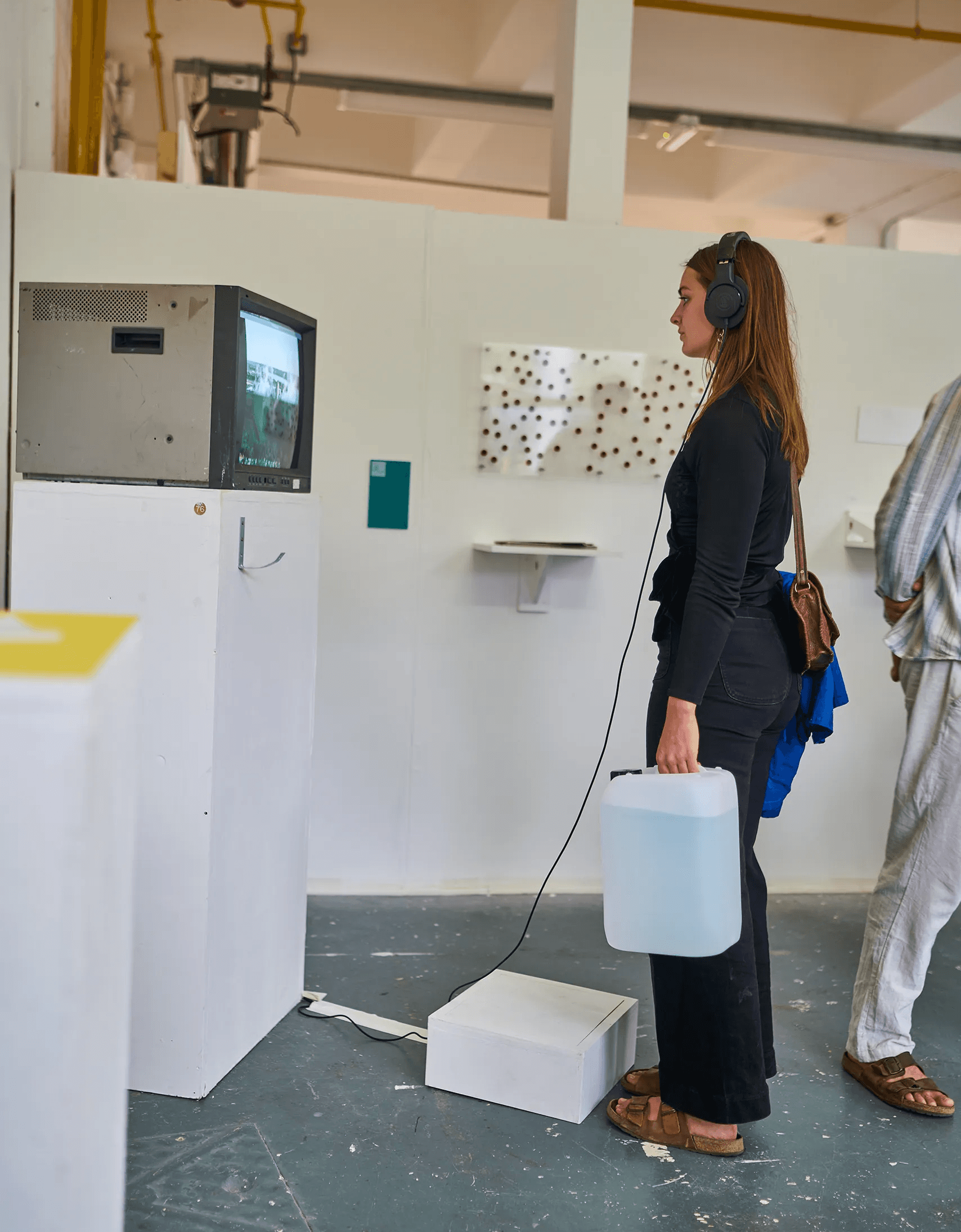
The visitor enters and finds a single ten-litre jerry can on a low plinth, a monitor on the wall, and nothing else. Lifting the can starts the film. The screen shows water collection — real footage, real faces, real distances. Setting the can down pauses the world on the screen. The weight is the argument.
One visitor. One can. Three minutes.
Held, not watched.
The visitor enters and finds a single ten-litre jerry can on a low plinth, a monitor on the wall, and nothing else. Lifting the can starts the film. The screen shows water collection — real footage, real faces, real distances. Setting the can down pauses the world on the screen. The weight is the argument.
From brief to built
The jerry can needed a limit switch wired to its handle — so lifting it triggers the film. A wooden platform was built to seat the can at the right height for visitors.
A hand-built wooden plinth lifted the can off the floor and into the sightline of visitors. The platform frames the jerry can as an object worth examining before it is held.
The Raspberry Pi reads the limit switch signal and controls video playback via Python. VLC produced artefacts on pause — switched to MPV for clean, frame-accurate stops.
Real news footage interlaced with AI-generated sequences. One grade, one rhythm. The seam is invisible.
From brief to built
The jerry can needed a limit switch wired to its handle — so lifting it triggers the film. A wooden platform was built to seat the can at the right height for visitors.
A hand-built wooden plinth lifted the can off the floor and into the sightline of visitors. The platform frames the jerry can as an object worth examining before it is held.
The Raspberry Pi reads the limit switch signal and controls video playback via Python. VLC produced artefacts on pause — switched to MPV for clean, frame-accurate stops.
Real news footage interlaced with AI-generated sequences. One grade, one rhythm. The seam is invisible.
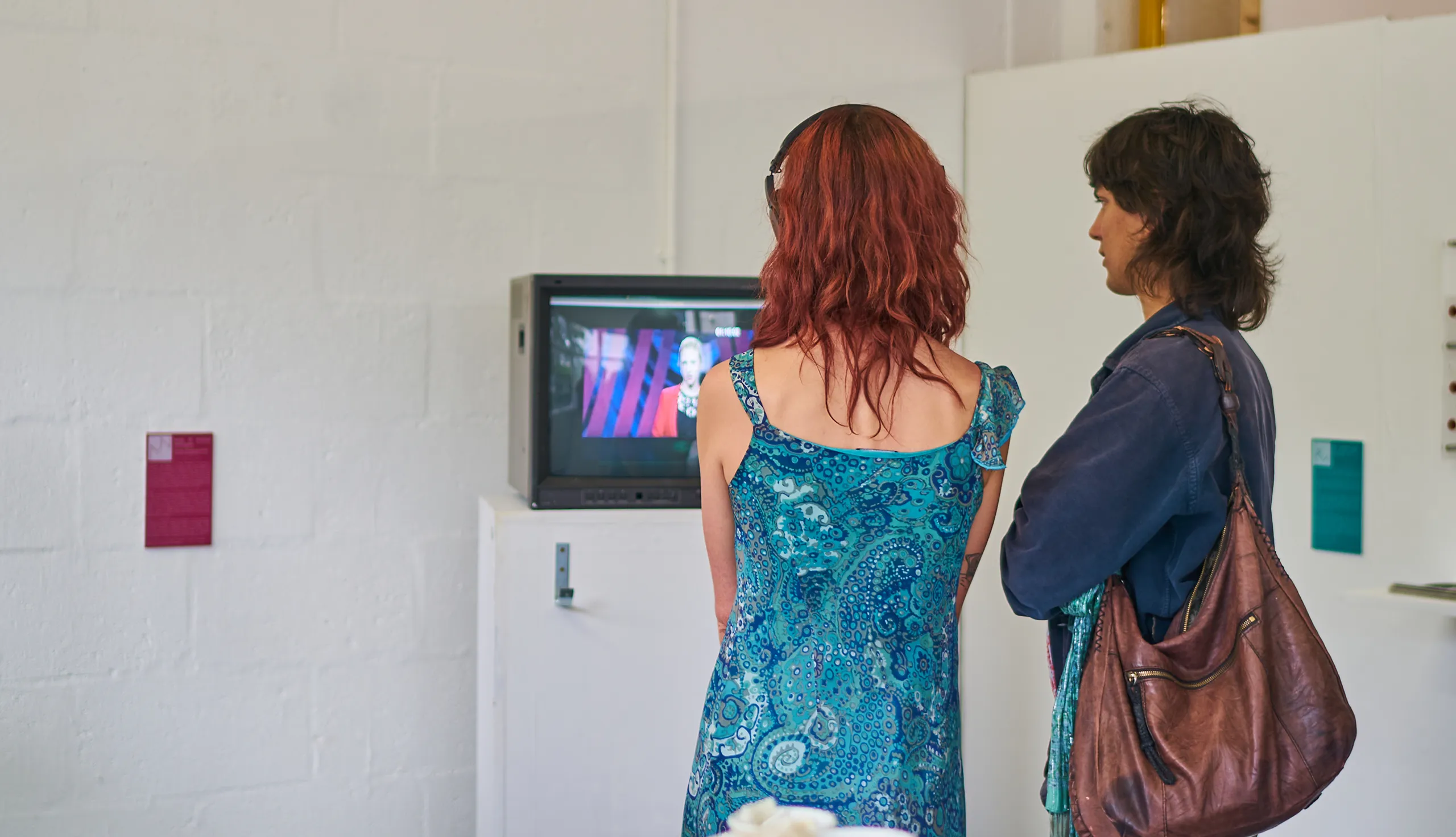
Shown across four days of the Falmouth University MA Degree Shows. Only one visitor could lift the can at a time — the work shaped its own queue. Most stayed the full three minutes.
Shown across four days of the Falmouth University MA Degree Shows. Only one visitor could lift the can at a time — the work shaped its own queue. Most stayed the full three minutes.






Argument is the wrong word. The body is the argument.
Argument is the wrong word. The body is the argument.
Visitors held the can before reading a single line of text. Several stayed the full three minutes — not because they were instructed to, but because putting it down felt like an act. That's the proof: material carries persuasive force that copy cannot replicate. The body understood the inequality before the mind had processed it.
Take the can where the data lives.
The installation was built for an art school. The next version belongs somewhere harder — a tech company's atrium, a climate policy summit, a product launch for the next AI model. The argument only sharpens when the audience has a stake in dismissing it. A multi-can variant — ten cans, ten visitors carrying simultaneously — would test whether the discomfort scales or dissolves into spectacle.
Argument is the wrong word. The body is the argument.
Argument is the wrong word. The body is the argument.
Visitors held the can before reading a single line of text. Several stayed the full three minutes — not because they were instructed to, but because putting it down felt like an act. That's the proof: material carries persuasive force that copy cannot replicate. The body understood the inequality before the mind had processed it.
Take the can where the data lives.
The installation was built for an art school. The next version belongs somewhere harder — a tech company's atrium, a climate policy summit, a product launch for the next AI model. The argument only sharpens when the audience has a stake in dismissing it. A multi-can variant — ten cans, ten visitors carrying simultaneously — would test whether the discomfort scales or dissolves into spectacle.