 Falmouth MA · Degree ShowFig. 01 · Critical Object · 2025
Hidden Thirst.
Falmouth MA · Degree ShowFig. 01 · Critical Object · 2025Hidden Thirst.
Hidden Thirst began as a search for a critical dataset — something important that people hadn’t seen, brought into visible form. The investigation moved through water: global footprint data, daily consumption, scarcity. Then AI entered the frame. One paper stopped everything: a single ChatGPT query consumes 500 ml of freshwater, evaporated through cooling infrastructure and never recovered. That number needed a form. Not a chart. Not a screen. An object — cast in the material of things that are meant to last.
The brief was to find hidden data. The data found was hiding inside something everyone uses and nobody questions. This was the first answer — shown at ECHOES before Weight of AI scaled the same thesis to the full Falmouth degree show. Where that installation asks you to carry the cost for three minutes, Hidden Thirst asks you to hold it permanently.
Hidden Thirst began as a search for a critical dataset — something important that people hadn’t seen, brought into visible form. The investigation moved through water: global footprint data, daily consumption, scarcity. Then AI entered the frame. One paper stopped everything: a single ChatGPT query consumes 500 ml of freshwater, evaporated through cooling infrastructure and never recovered. That number needed a form. Not a chart. Not a screen. An object — cast in the material of things that are meant to last.
The brief was to find hidden data. The data found was hiding inside something everyone uses and nobody questions. This was the first answer — shown at ECHOES before Weight of AI scaled the same thesis to the full Falmouth degree show. Where that installation asks you to carry the cost for three minutes, Hidden Thirst asks you to hold it permanently.
A single ChatGPT query consumes 500 ml of freshwater. That volume disappears into cooling infrastructure no user ever sees.
A single ChatGPT query consumes 500 ml of freshwater. That volume disappears into cooling infrastructure no user ever sees.
Freshwater consumed by a single ChatGPT query — evaporated through data-centre cooling towers and never recovered.
Daily queries to ChatGPT alone. Each one draws half a litre. The aggregate is a river.
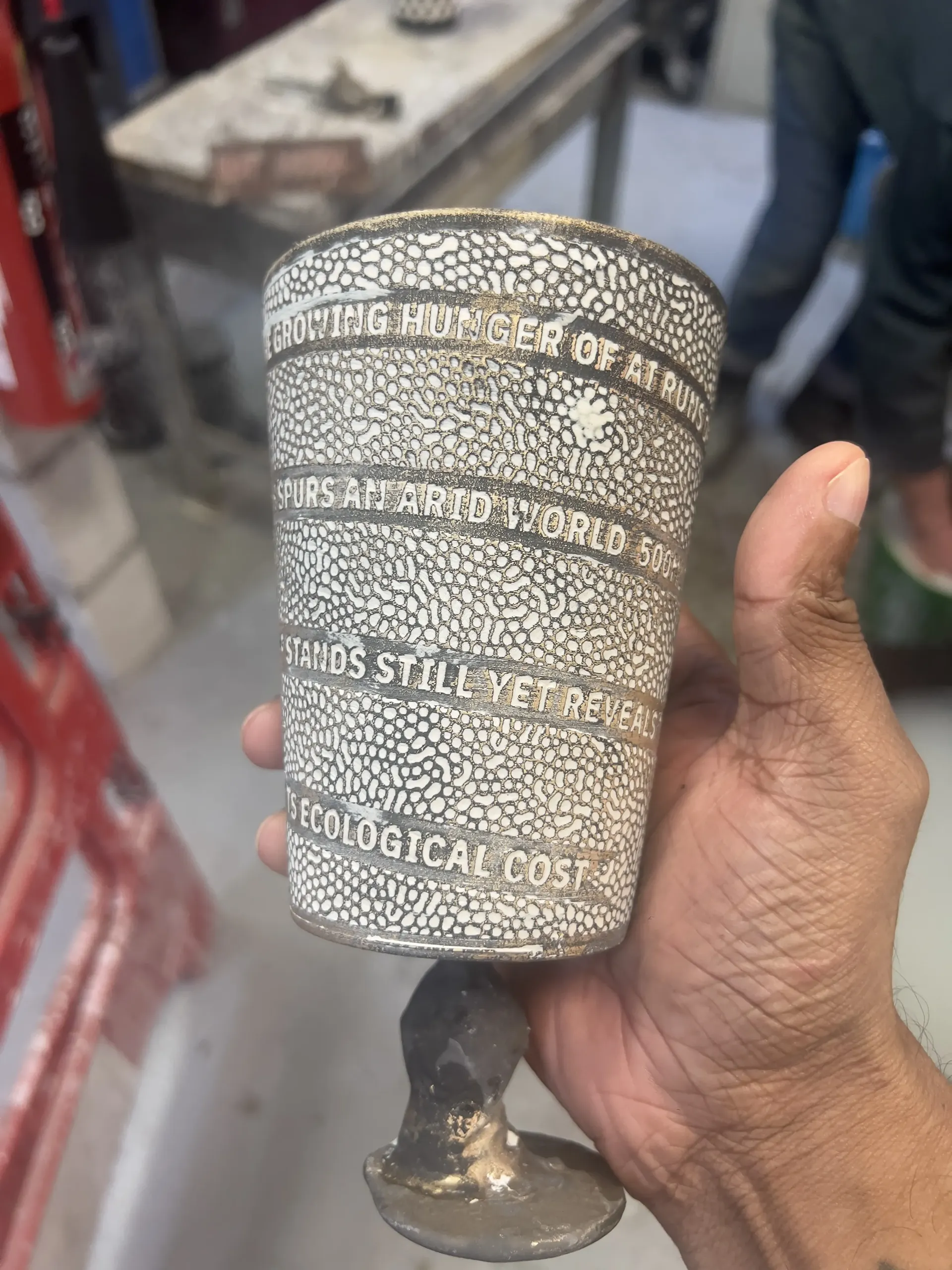
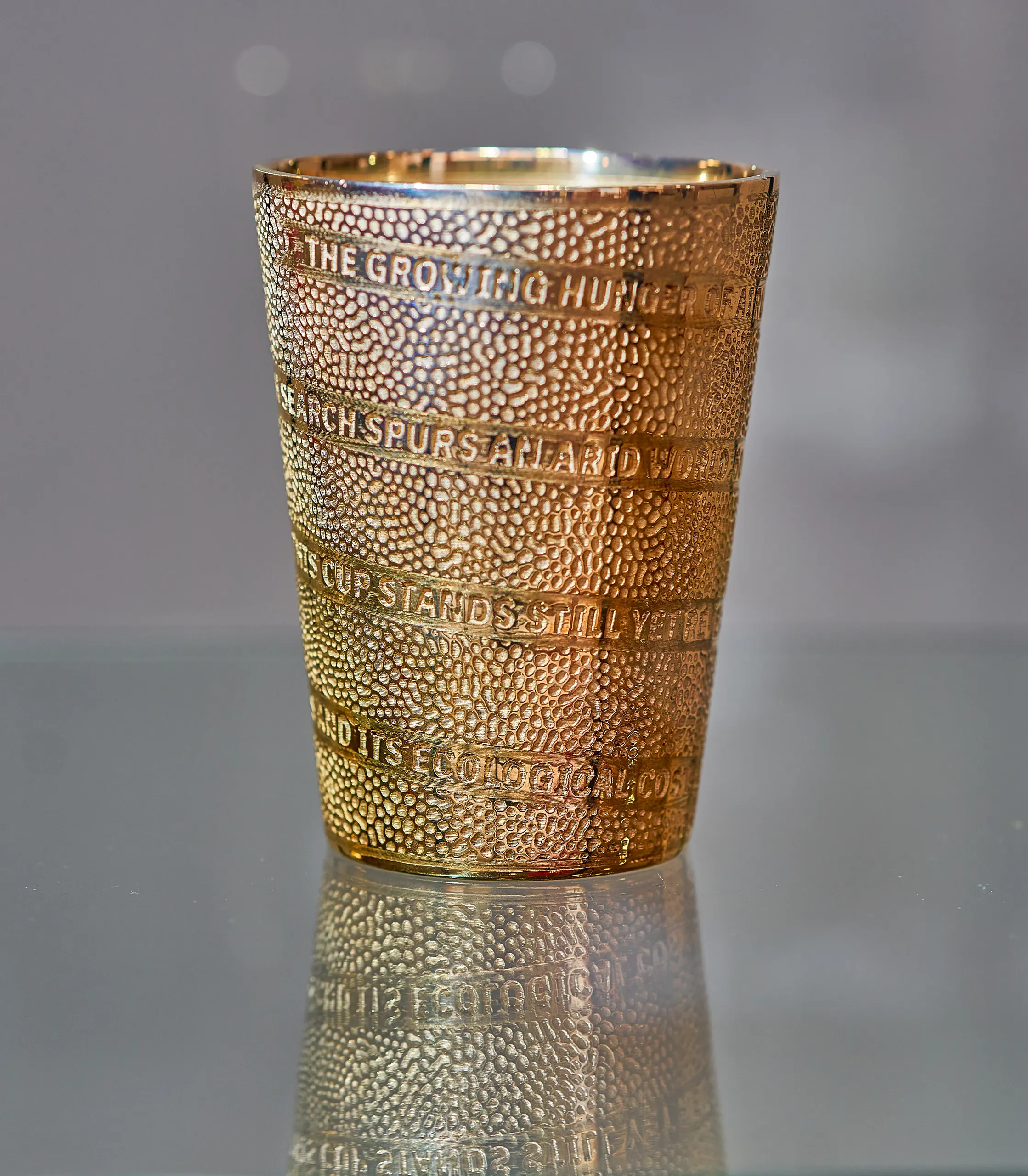
A single bronze vessel cast to hold exactly 500 ml — the data made precious, permanent, and impossible to ignore.
Freshwater consumed by a single ChatGPT query — evaporated through data-centre cooling towers and never recovered.
Daily queries to ChatGPT alone. Each one draws half a litre. The aggregate is a river.
A single bronze vessel cast to hold exactly 500 ml — the data made precious, permanent, and impossible to ignore.
The investigation began with water. Not AI — water. Moving through global consumption data and water footprint research, a single statistic stopped everything: one ChatGPT query consumes 500 ml of freshwater. That volume disappears into cooling infrastructure no user ever sees. The brief became immediate — find a form that makes that number impossible to dismiss.
Translate the 500 ml finding into a single object that communicates without explanation. No labels. No screens. No data chart. Just the cost, made permanent.
The investigation began with water. Not AI — water. Moving through global consumption data and water footprint research, a single statistic stopped everything: one ChatGPT query consumes 500 ml of freshwater. That volume disappears into cooling infrastructure no user ever sees. The brief became immediate — find a form that makes that number impossible to dismiss.
Translate the 500 ml finding into a single object that communicates without explanation. No labels. No screens. No data chart. Just the cost, made permanent.
The research started broad — water footprint data, daily consumption figures, scarcity statistics. The aim was to find a dataset with genuine stakes that hadn’t been designed around. Then the AI angle surfaced: Ren et al. (2023) at UC Riverside had quantified the freshwater footprint of large language models. The 500 ml figure — specific, verifiable, per query — was the anchor. Precise enough to design around. Universal enough that anyone could feel it.
Bronze was chosen because it carries cultural weight: it is the material of monuments, bells, and things societies decide must last. If AI’s water cost deserves to be remembered, it deserves bronze.
The research started broad — water footprint data, daily consumption figures, scarcity statistics. The aim was to find a dataset with genuine stakes that hadn’t been designed around. Then the AI angle surfaced: Ren et al. (2023) at UC Riverside had quantified the freshwater footprint of large language models. The 500 ml figure — specific, verifiable, per query — was the anchor. Precise enough to design around. Universal enough that anyone could feel it.
Bronze was chosen because it carries cultural weight: it is the material of monuments, bells, and things societies decide must last. If AI’s water cost deserves to be remembered, it deserves bronze.
We read the data. We understand the data. We never hold it.
We read the statistic. We nod. We scroll past. The number never touches us because it has no weight, no temperature, no texture. The vessel gives 500 ml a body.
If you can hold the cost, you can’t forget it.
We read the data. We understand the data. We never hold it.
We read the statistic. We nod. We scroll past. The number never touches us because it has no weight, no temperature, no texture. The vessel gives 500 ml a body.
If you can hold the cost, you can’t forget it.
One query. half a litre.
Data, made precious.
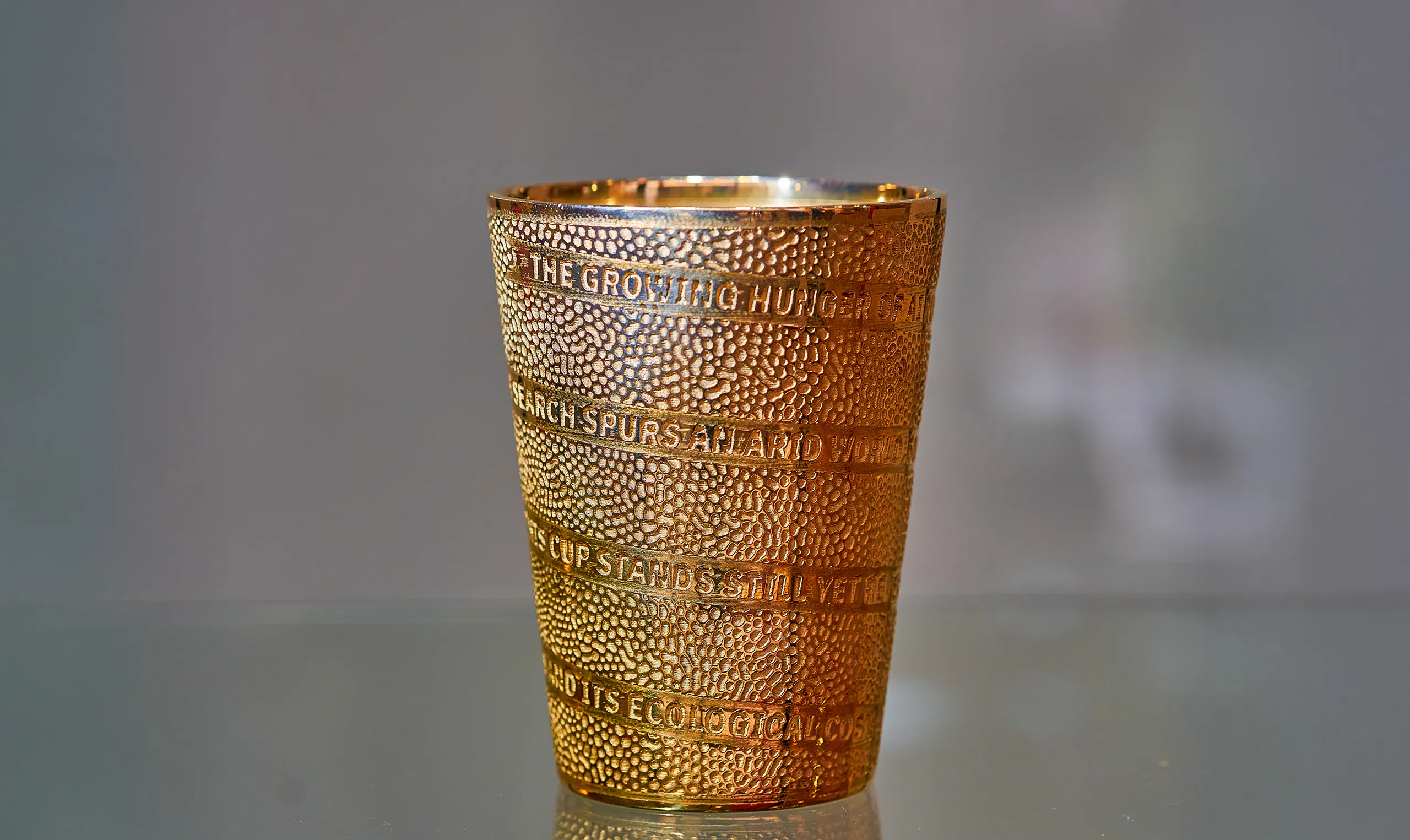
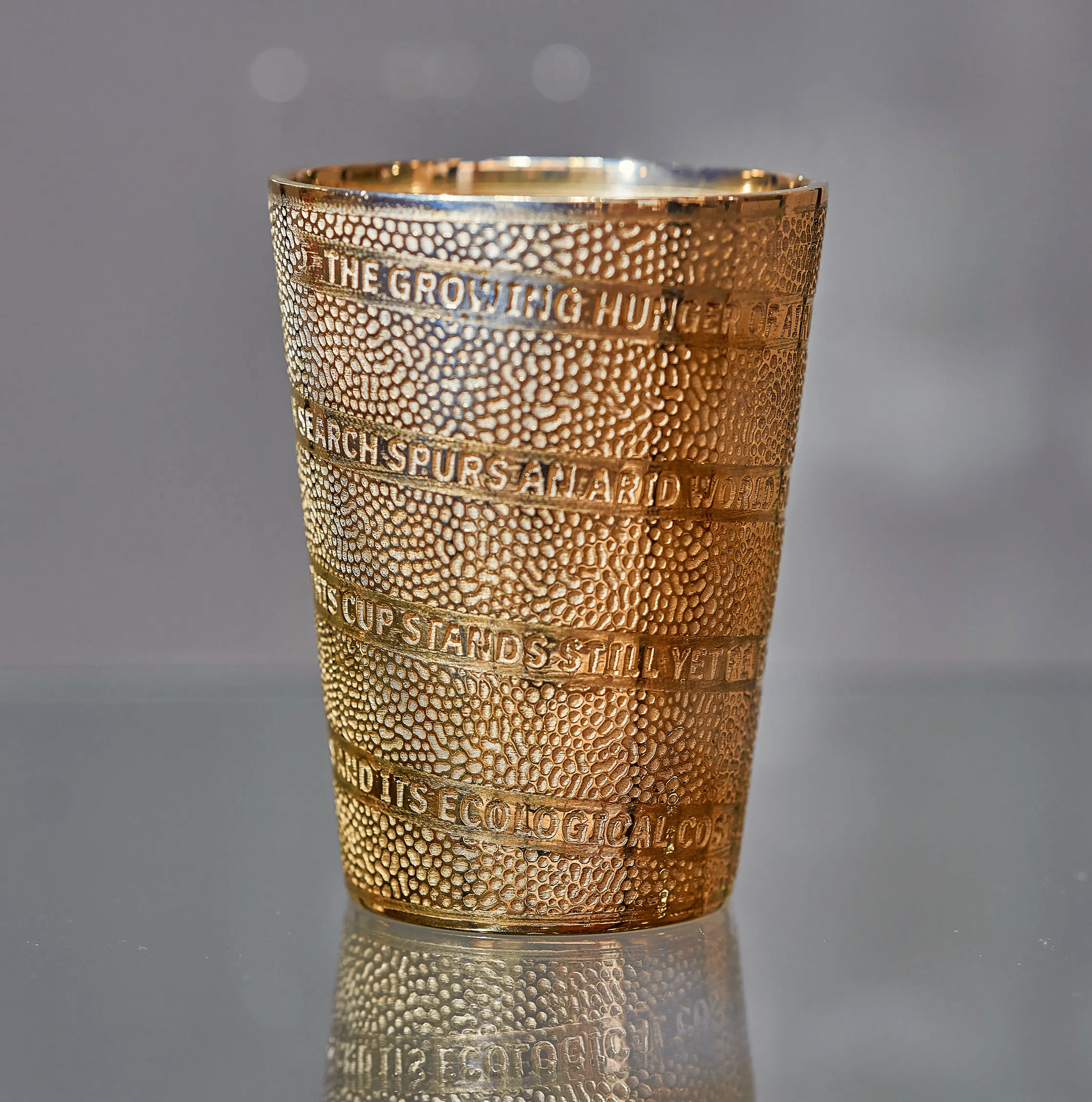
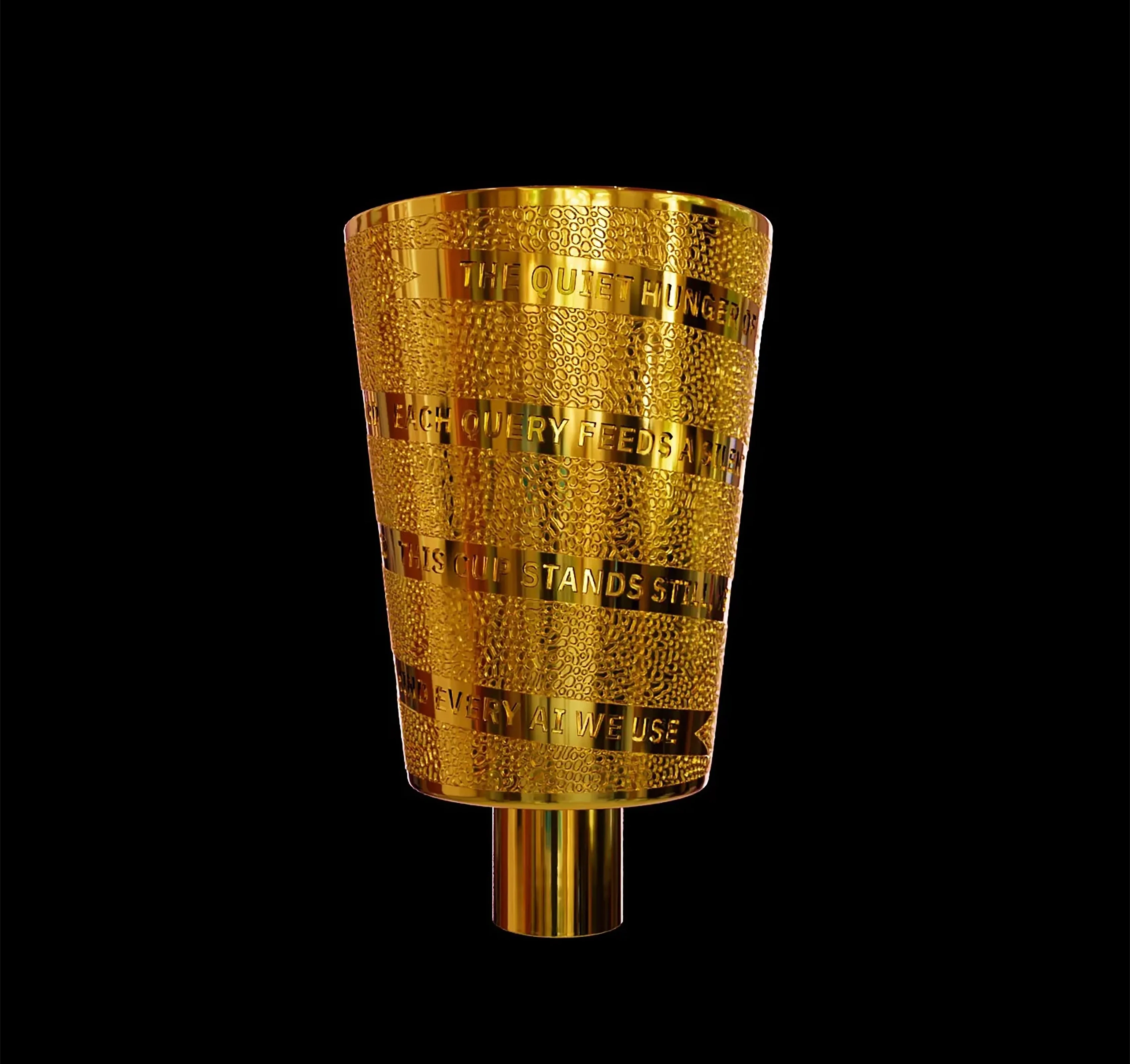
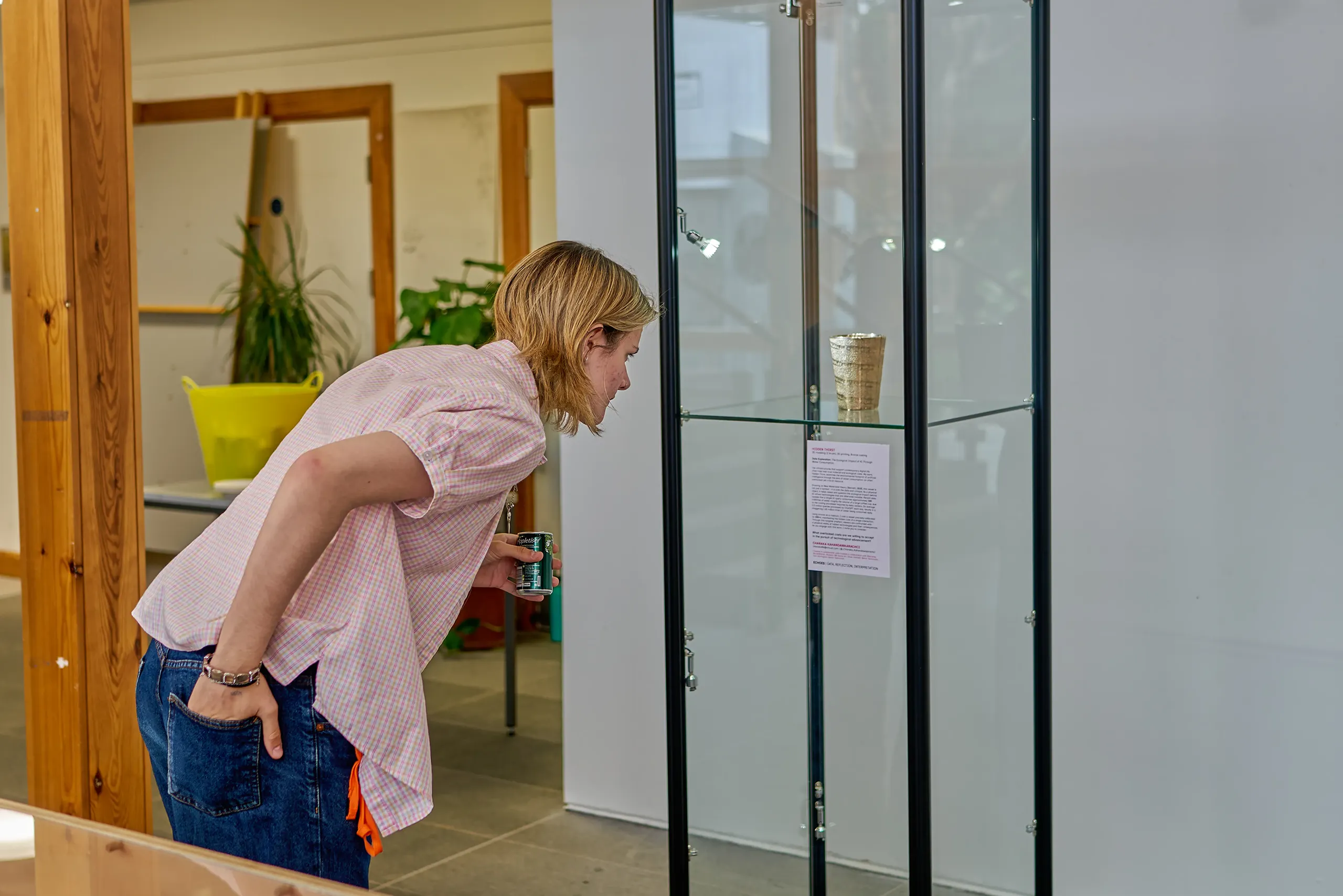
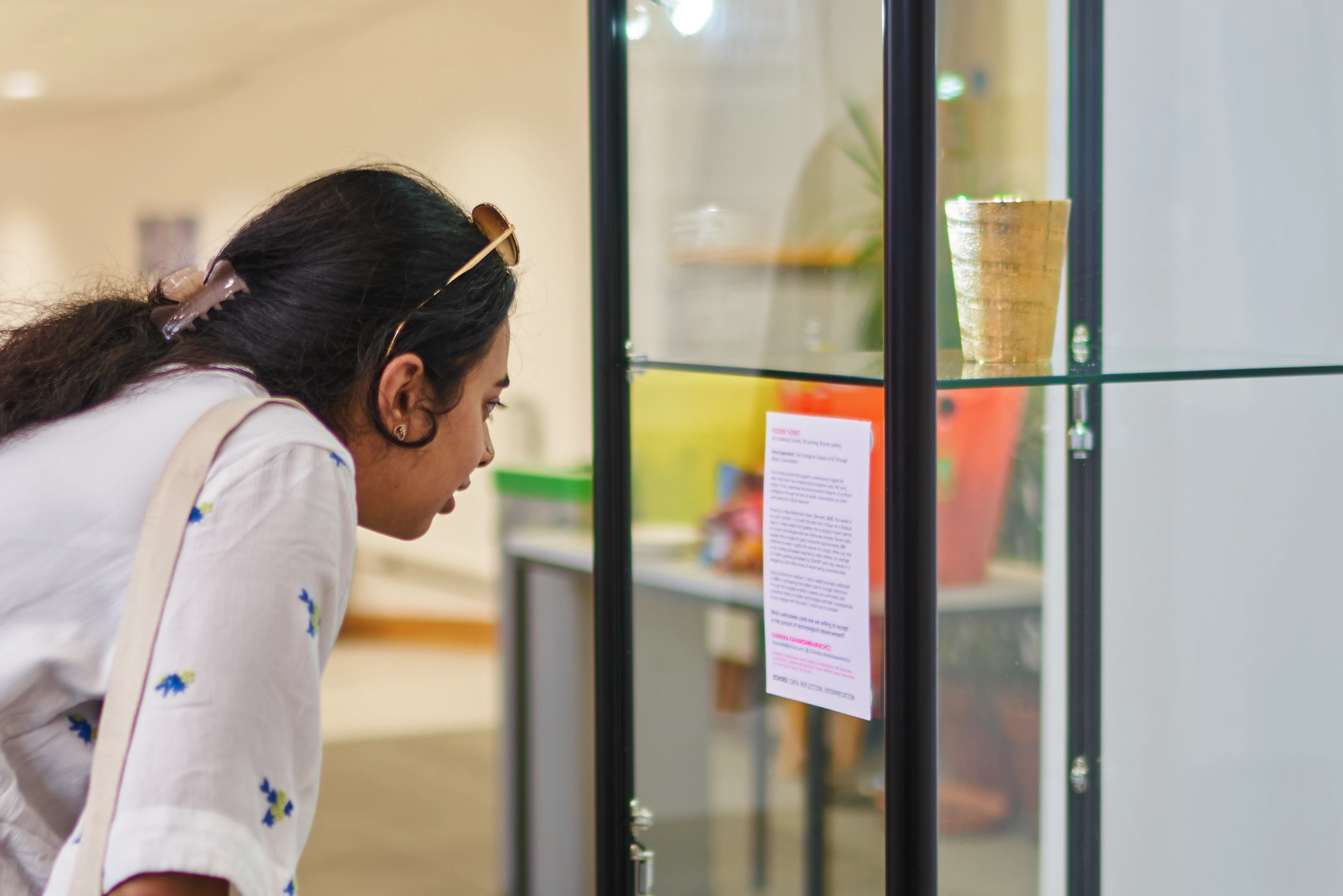
A single bronze vessel sits on a linen-covered plinth under a focused spot light. It holds exactly 500 ml — the freshwater consumed by one ChatGPT query. A spiral poem etched into its surface can only be read by turning the object in your hands.
One query. half a litre.
Data, made precious.
A single bronze vessel sits on a linen-covered plinth under a focused spot light. It holds exactly 500 ml — the freshwater consumed by one ChatGPT query. A spiral poem etched into its surface can only be read by turning the object in your hands.
From brief to built
Locked the design brief from research findings and critical theory — one vessel, exactly 500 ml, carrying engraved poetry. The form needed to communicate without labels or explanation.
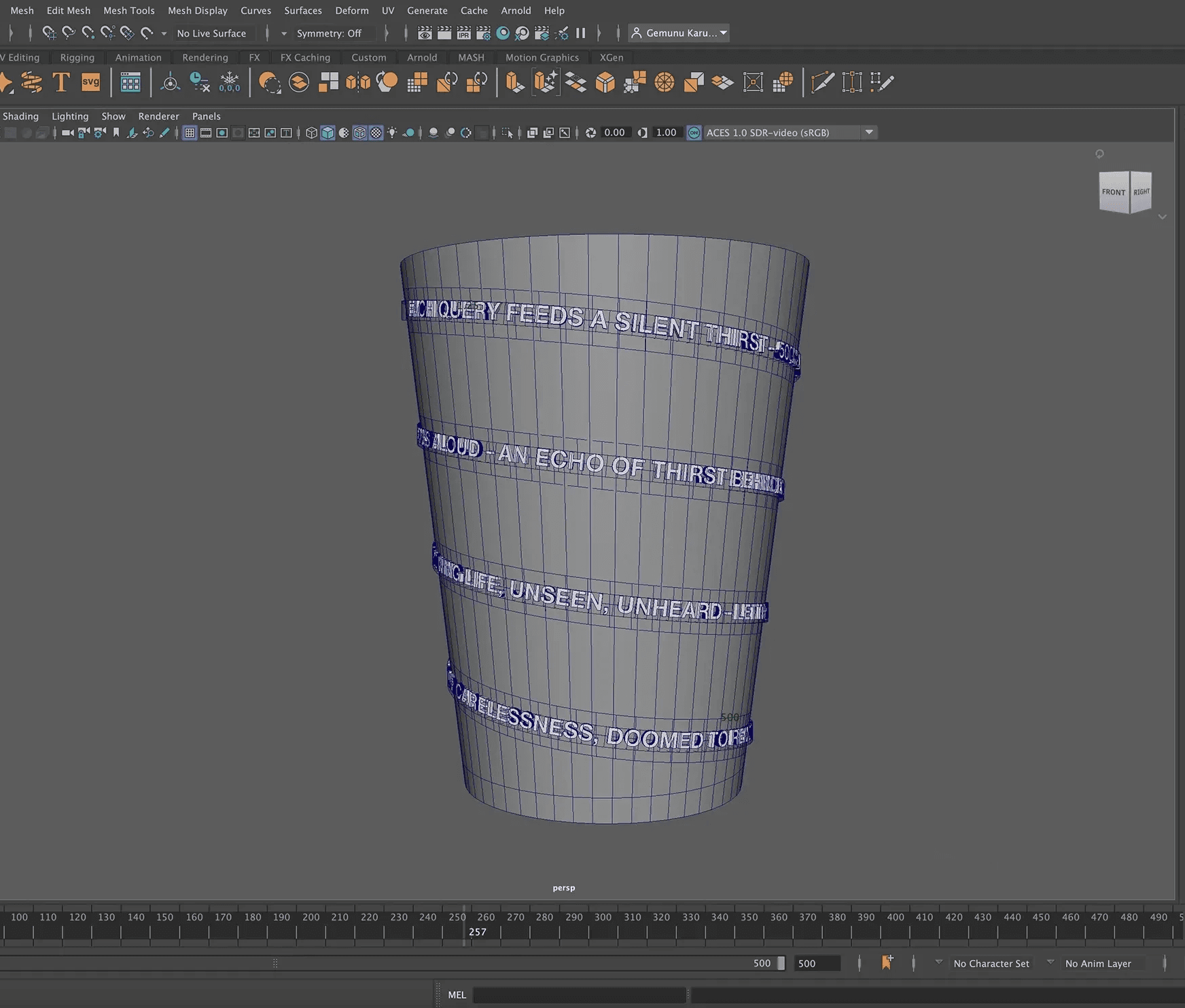
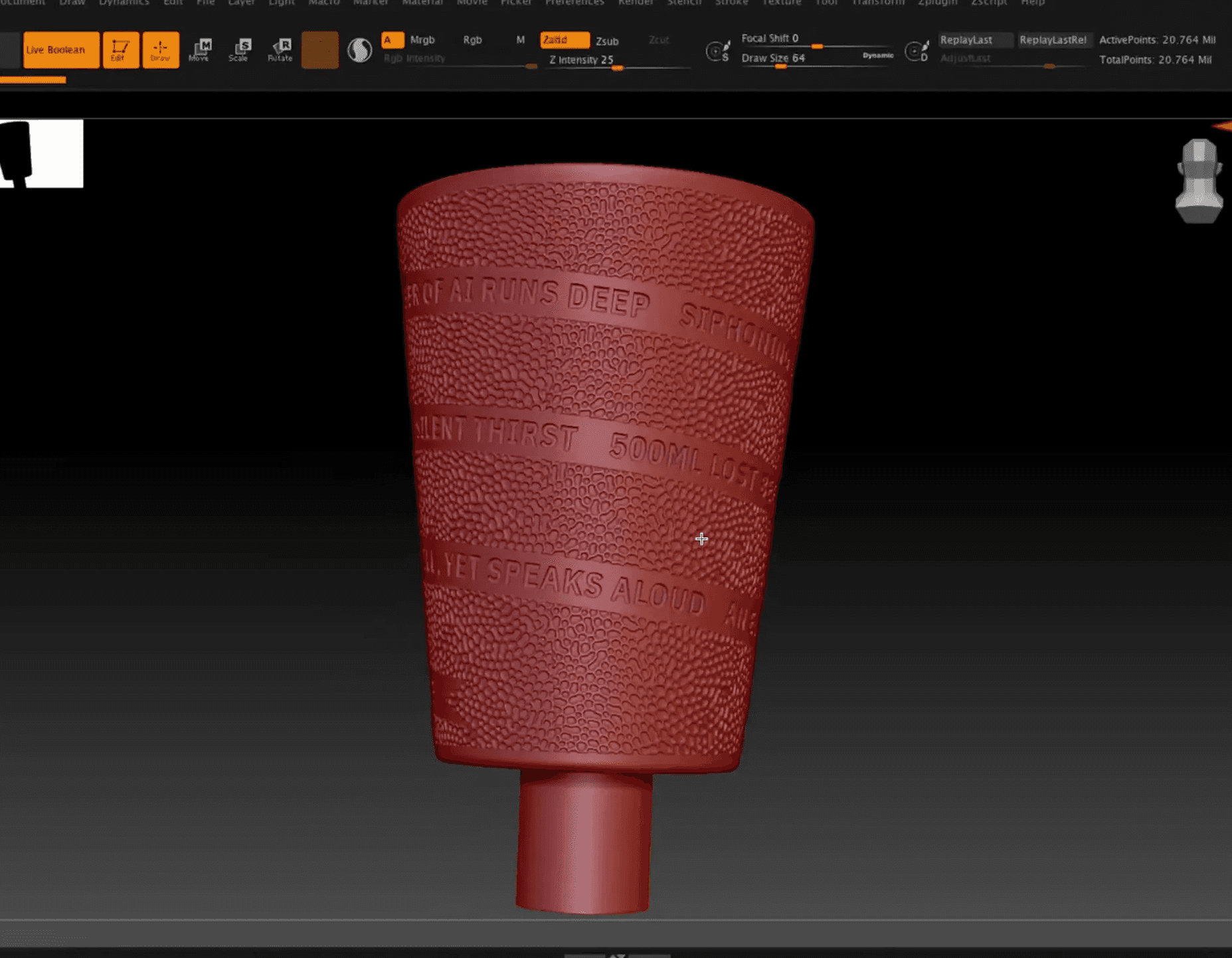
Built the base form and proportions in Autodesk Maya, then brought the model into ZBrush to refine surface texture, add the engraving layout, and develop tactile detail for the casting process.
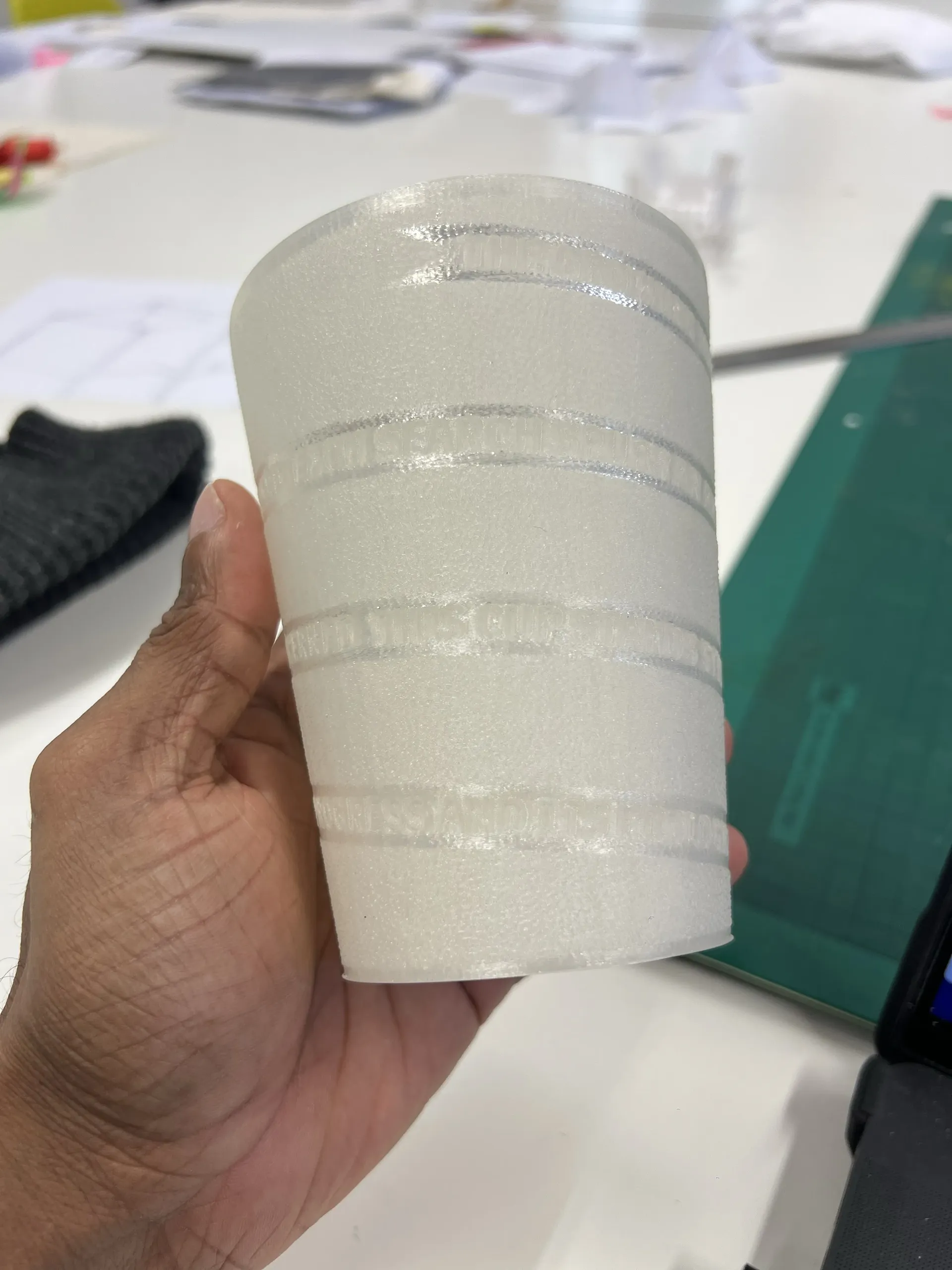
Printed using a Bambu Lab printer with Polycast filament at the highest resolution setting — preserving every surface detail and engraving line needed for the investment casting process.
Bronze cast at a professional foundry using the lost-wax method. Post-processing included sandblasting, hand finishing, and polishing to achieve the final surface.
From brief to built
Locked the design brief from research findings and critical theory — one vessel, exactly 500 ml, carrying engraved poetry. The form needed to communicate without labels or explanation.
Built the base form and proportions in Autodesk Maya, then brought the model into ZBrush to refine surface texture, add the engraving layout, and develop tactile detail for the casting process.
Printed using a Bambu Lab printer with Polycast filament at the highest resolution setting — preserving every surface detail and engraving line needed for the investment casting process.
Bronze cast at a professional foundry using the lost-wax method. Post-processing included sandblasting, hand finishing, and polishing to achieve the final surface.
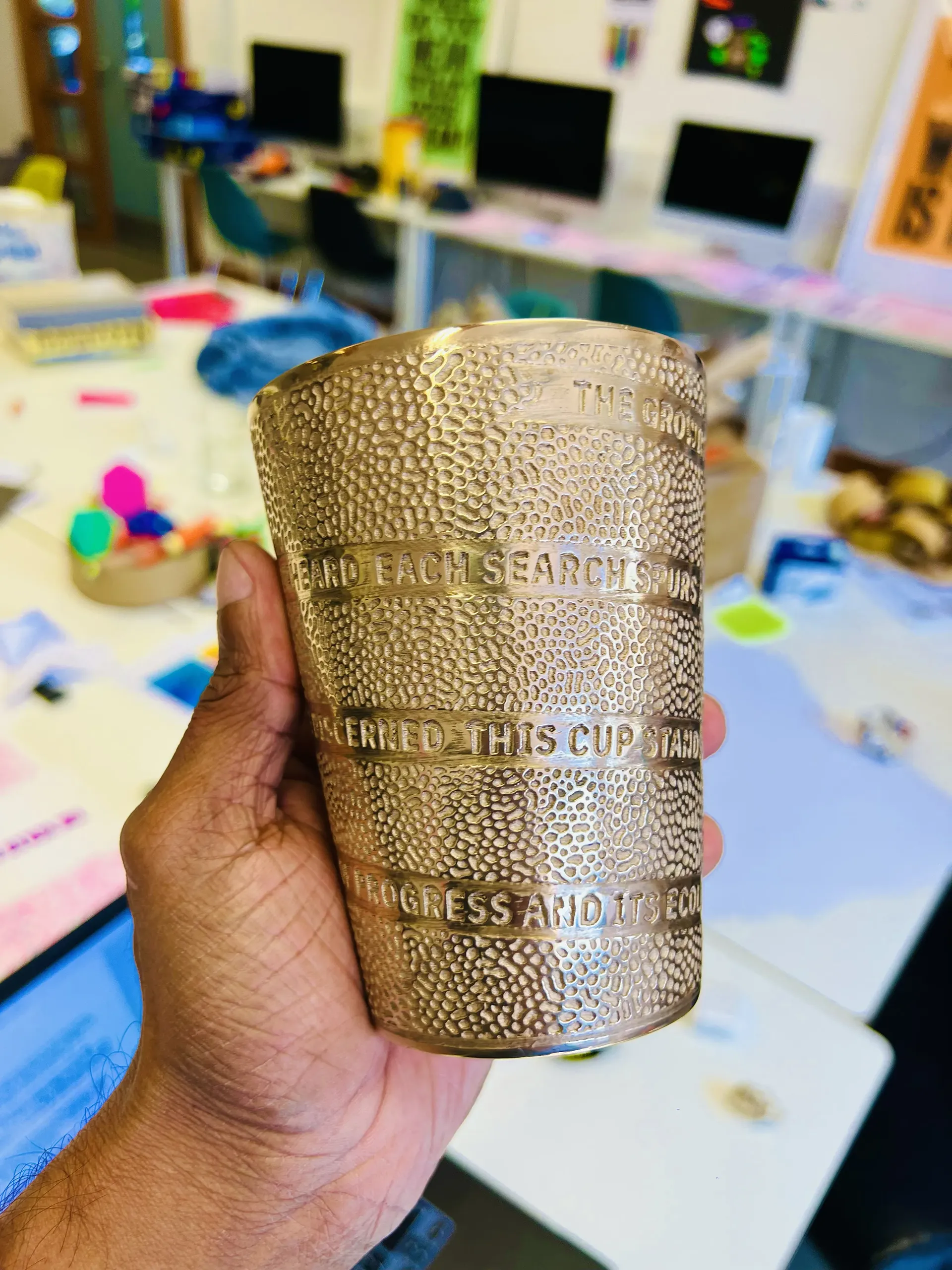
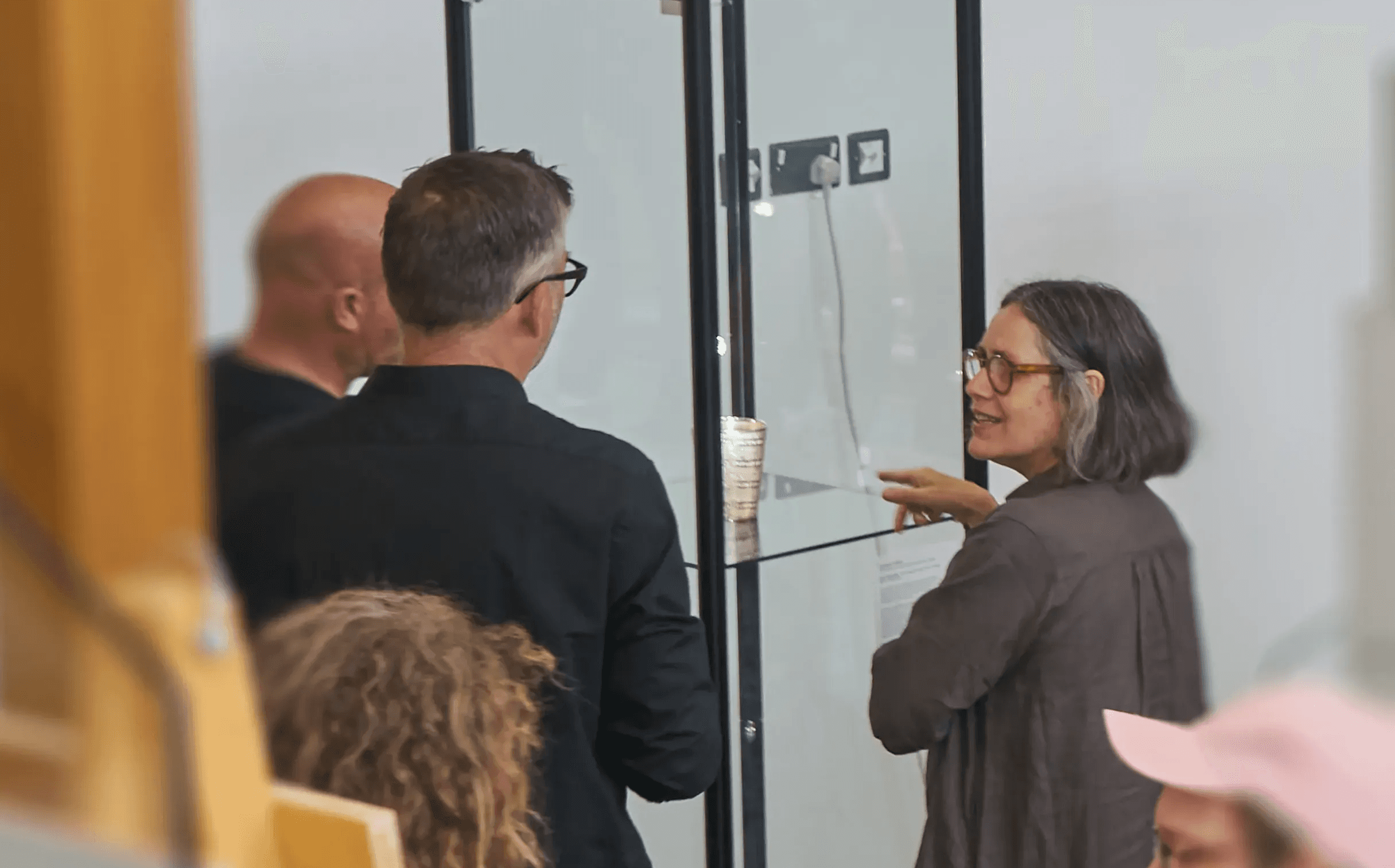
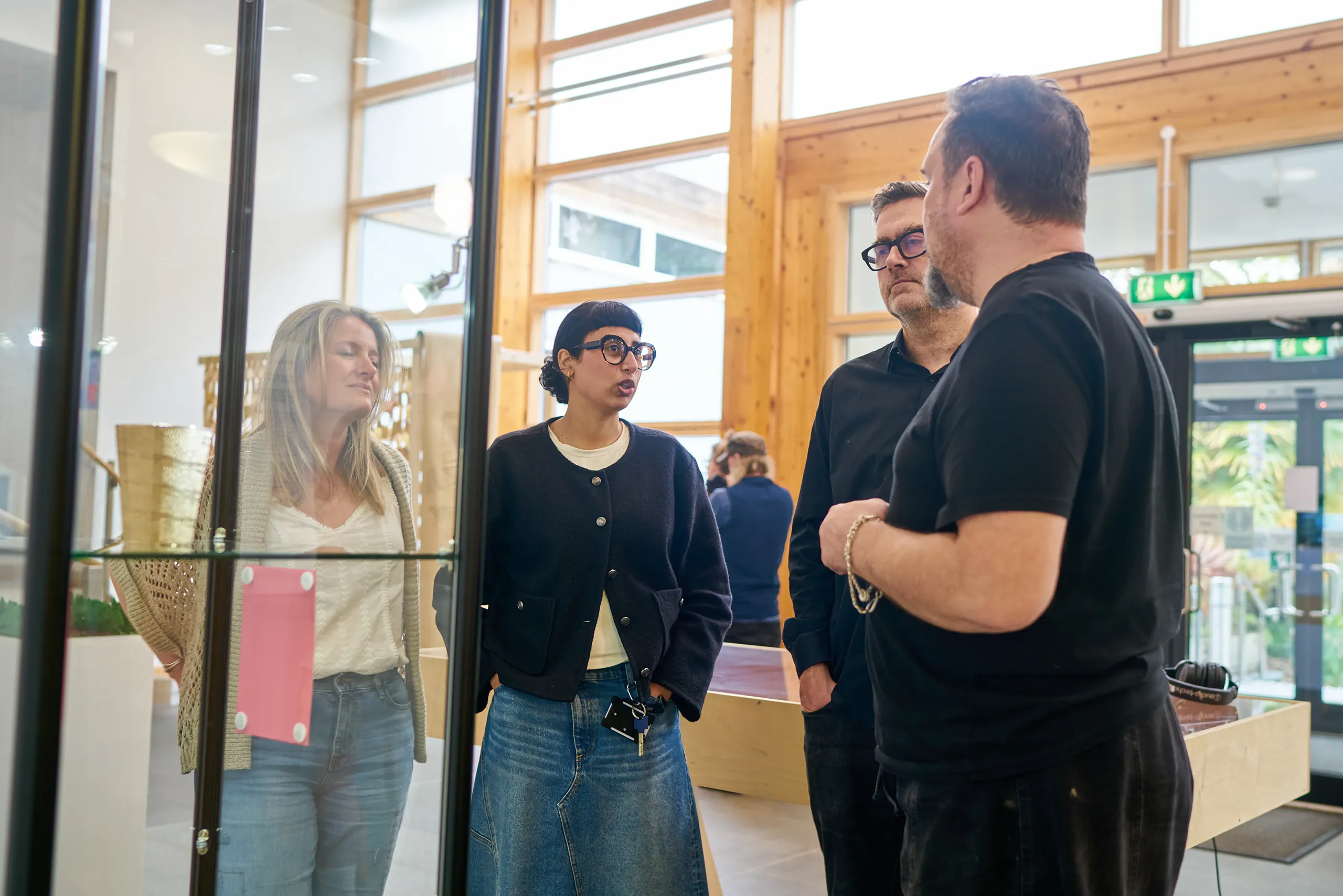
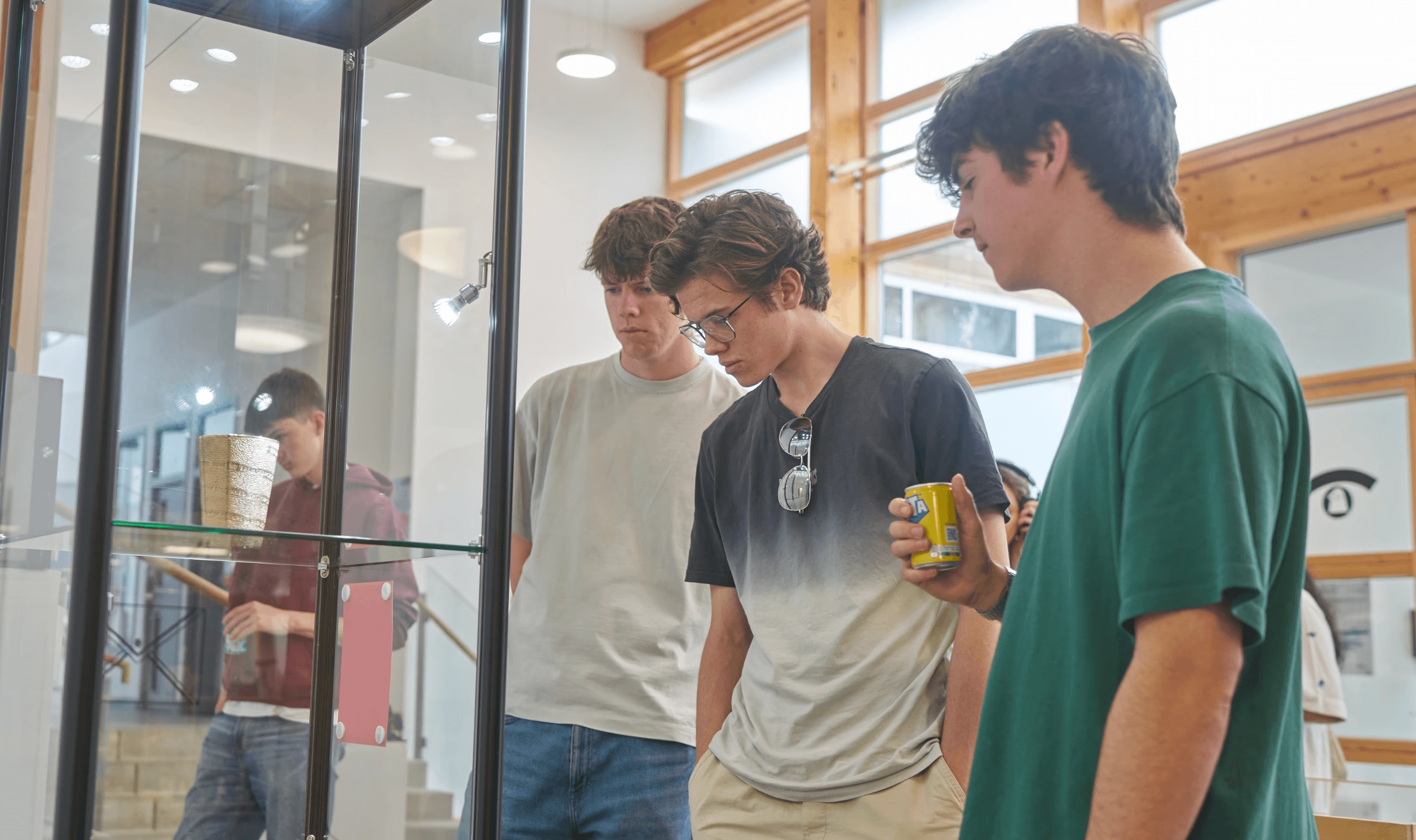
Shown at ECHOES — a Falmouth MA Communication Design cohort exhibition on data, reflection, and interpretation (May 2025) — alongside eight peers exploring how meaning is shaped by lived experience. Visitors picked up the vessel without prompting — the form invited touch. Several asked if the 500 ml was real.
Shown at ECHOES — a Falmouth MA Communication Design cohort exhibition on data, reflection, and interpretation (May 2025) — alongside eight peers exploring how meaning is shaped by lived experience. Visitors picked up the vessel without prompting — the form invited touch. Several asked if the 500 ml was real.
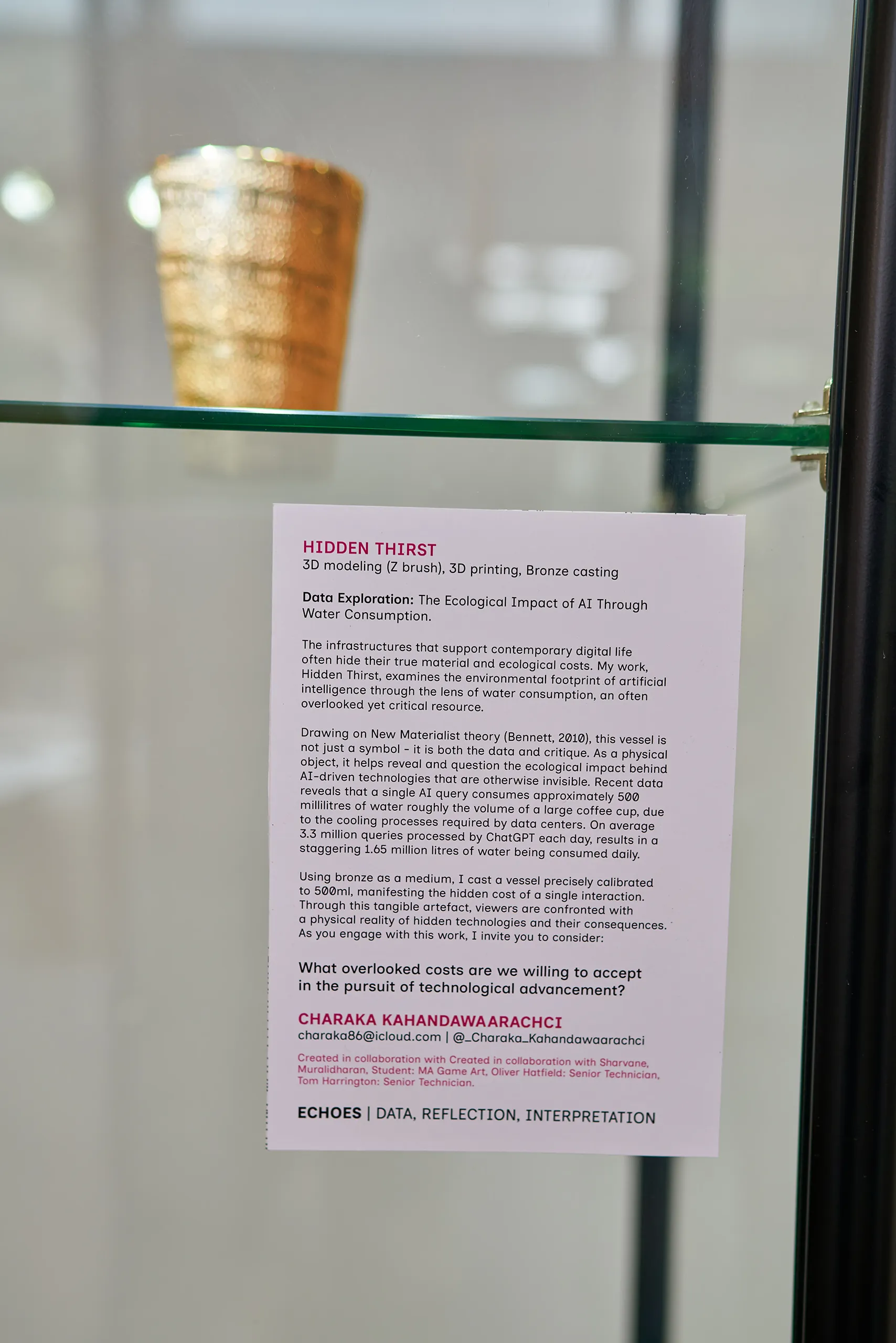
The volume is exact. The material is permanent.
The volume is exact. The material is permanent.
The 500 ml volume landed without explanation — visitors understood the concept before reading any text. Bronze carried its own argument as a material of permanence, and the spiral poem demanded physical engagement, turning the act of reading into a bodily experience. Process constraints — engraving limits, casting tolerances — strengthened the design rather than limiting it.
Give the vessel a life outside the gallery.
Tour the vessel beyond the university context — climate-tech conferences, policy spaces — where the audience doesn't share the same priors. Commission poem translations into languages spoken in water-scarce regions, so the work speaks to the communities it concerns. Pair the object with a live data feed of real-time AI water consumption.
The volume is exact. The material is permanent.
The volume is exact. The material is permanent.
The 500 ml volume landed without explanation — visitors understood the concept before reading any text. Bronze carried its own argument as a material of permanence, and the spiral poem demanded physical engagement, turning the act of reading into a bodily experience. Process constraints — engraving limits, casting tolerances — strengthened the design rather than limiting it.
Give the vessel a life outside the gallery.
Tour the vessel beyond the university context — climate-tech conferences, policy spaces — where the audience doesn't share the same priors. Commission poem translations into languages spoken in water-scarce regions, so the work speaks to the communities it concerns. Pair the object with a live data feed of real-time AI water consumption.